In the rolling hills of southern Italy, tucked away in the region of Puglia, stands a sanctuary steeped in centuries of prayer, silence, and sanctity. The Sanctuary of Santa Maria della Consolazione in Deliceto has quietly welcomed remarkable saints whose spiritual legacy continues to resonate far beyond its stone walls.
Today, the sanctuary’s doors are opened by Father Luca Preziosi, its rector, who guides visitors through a place where holiness once took flesh in the lives of hermits, pastors, and poets of faith. Father explains:
“Blessed Felice da Corsano, an Augustinian hermit who lived here for thirty years in this cave, was also a saint who people went to because they felt he had an enlightened word and was sought after.”
Blessed Felice’s death marked the end of one holy chapter in Deliceto. Yet decades later, another saint would arrive at this same sanctuary—one whose legacy would echo in song.
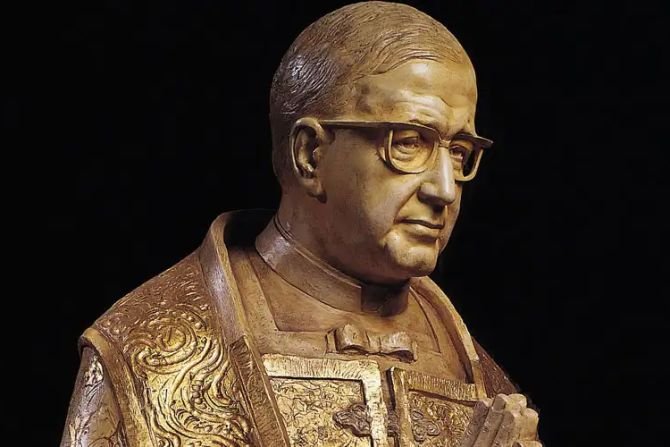
That saint was Alphonsus Maria de’ Liguori, who would later be proclaimed a Doctor of the Church in 1871 and named Heavenly Patron of all confessors and moralists. It was here, in this remote corner of Puglia, that the roots of one of Italy’s most beloved Christmas carols were planted.
Father Luca explains that Saint Alphonsus’s mission was born from compassion for the simplest people he encountered.
“Alfonso wants to share a little of this beauty, of his knowledge of Jesus. And how does he do it? He says, but these simple people, who come down from Abruzzo, don’t know how to read or write—how do I talk to them about Jesus?”
Those “simple people” were sheep herders from Abruzzo, participants in an ancient pastoral migration known as transhumance. Each winter, they led their flocks south to the plains of Puglia, living with little more than what they carried, often without homes or security.
Saint Alfonso saw in them the shepherds of Bethlehem—poor, unseen, yet chosen.
“I imagine that Saint Alphonsus saw these thousands and thousands of sheep in these valleys, and these men and women who came down who didn’t even have a home, nothing. And how could these people feel?” Fr. Luca asks.
“With this shepherd,” he continues, “a good shepherd really wants to make them feel that they are important. Because Jesus says he comes down from heaven for them, a bit recalling the story told by Saint Luke. These shepherds were there in Bethlehem and saw the angels there. So Saint Alphonsus says, I also want to speak to these shepherds today about God’s love for them!”
It was from this desire—to speak of God’s love in a language the heart could understand—that a song was born.
But what inspired Saint Alfonso to write this Christmas hymn?
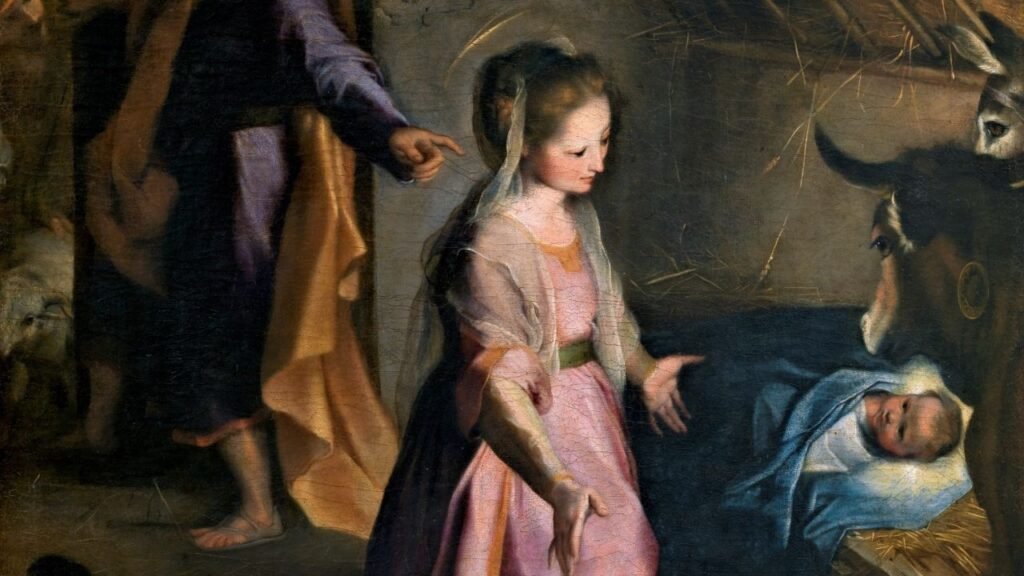
Father Luca points to a single, powerful moment of contemplation inside the sanctuary.
“According to his biographer, he fixated his gaze on this painting, a beautiful image. And he felt called—called personally by Mary, to whom he was deeply devoted—to remain here.”
From that prayerful stillness emerged “Tu scendi dalle stelle”—a Christmas carol that would move generations of Italians and eventually the world.
Today, that legacy is being carried forward by Luciano Lamonarca, a tenor from Puglia who has made it his mission to bring the song to new audiences, especially in the English-speaking world:
“As a tenor I of course wanted to promote the legacy of this song, so like Luciano Franchi and Luciano Pavarotti and Andrea Bocelli who have recorded the song mostly in Italy, in Italian, I supported a project that would allow me to sing the song in all three languages and tell the story to the public at large, especially in America, where the song is not well known.”
The carol’s humble origins—written in a cold, poor place for people who could not read—stand in striking contrast to its global reach today.
As Archbishop Giorgio Ferretti, Metropolitan Archbishop of Foggia-Bovino, reflects:
“Tu scendi dalle stelle is a beautiful, old song made by Saint Alphonsus di Liguori, and it was made in Christmas time in a very small, poor, cold place. And now it’s sung all over the world.”
From the hills of Puglia to concert halls and churches across continents, the song’s journey continues—carrying with it a simple yet timeless message: God comes down for the poor, the forgotten, and the humble of heart.
Adapted by Jacob Stein. Produced by Alexey Gotvskiy; Camera by Gianpiero Passalia; Video Edited by Ilaria Chimenti. Special Thanks to the Sanctuary of Santa Maria della Consolazione, Deliceto.