A new Vatican note calls for renewed formation in interreligious dialogue while affirming religious differences and Christian identity.
VATICAN CITY — Sixty years after the Second Vatican Council’s declaration Nostra Aetate, the Vatican is calling for a renewed approach to interreligious dialogue aimed at fostering peaceful coexistence without erasing religious differences.
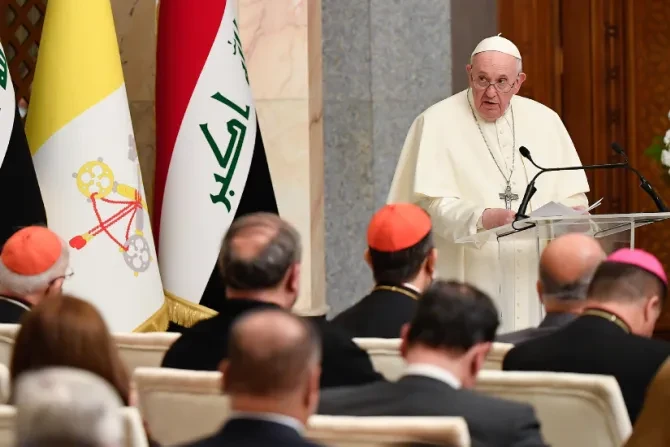
“Today, in the face of those who foment divisions and stir up conflicts, believers of different traditions — and above all their leaders — while remaining aware of their irreducible differences, are called to seek, with clarity and hope, the conditions necessary for peaceful coexistence,” states a new joint note from the Dicastery for the Doctrine of the Faith, the Dicastery for Promoting Christian Unity, and the Dicastery for Interreligious Dialogue.
The document, titled “A Journey of Hope: Sixty Years of Interreligious Dialogue and Fraternity in the Light of the Conciliar Declaration Nostra Aetate,” was published Sept. 16. Pope Leo XIV approved the note at an audience with the prefects and secretaries of the three dicasteries on June 22 and ordered its publication.
The text reviews the teaching of successive popes on interreligious relations, looks back at the path traveled since Nostra Aetate was promulgated in 1965, and turns to the challenges facing dialogue today.
“In stark contrast to those rigid attitudes that seek to resolve conflicts by force, it is time to promote a new ethic of dialogue: a culture of complexity, flexibility, and friendship,” the document states. “It is no longer a matter of fearing or keeping one’s distance from the ‘other believer’ — another civilization, another way of thinking — but of daring the encounter.”
One of the document’s proposals is to give greater recognition to concrete initiatives undertaken by local Churches.
“At the same time, greater appreciation must be given to the concrete initiatives undertaken by the local Churches, which are on the front lines,” the note states. “It is they who, at the local level, develop the most creative and courageous forms of encounter: dialogue commissions, joint projects, educational or humanitarian initiatives, and shared celebrations.”
By gathering and sharing those experiences, the document says, “the universal Church can enrich her life while also identifying and guiding new pastoral paths.”
At the same time, the Vatican note stresses that dialogue does not mean abandoning claims to religious truth.
“It is not, therefore, a matter of renouncing the truth but of proclaiming it in a manner befitting the Gospel: with esteem, listening, and charity,” the document states.
The note says achieving genuine dialogue requires “a genuine shift in mindset,” defined as “abandoning the logic of defensiveness, hostility, or conquest in order to adopt an attitude that is open, benevolent, and courageous.”
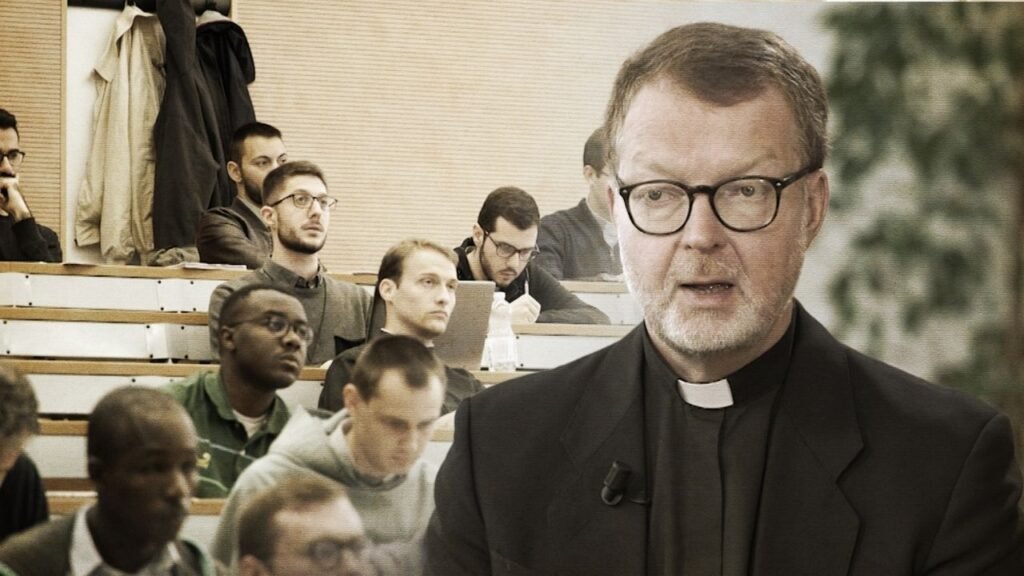
It also calls for a renewed pedagogy of dialogue, beginning with formation in seminaries, theological institutes, and pastoral programs.
“It is no longer sufficient to proclaim the importance of dialogue; it must now be lived, providing the faithful with the tools to participate in it in an informed, critical, and serene manner,” the document states.
The note points to knowledge of religions, the history of interreligious relations, guidelines for dialogue, religious literacy, and an understanding of contemporary cultural and geopolitical issues as important elements of such formation.
In its conclusion, the document underscores the importance it assigns to interreligious fraternity amid contemporary conflicts and social challenges.
“Fraternity among believers of different religious traditions is not merely an ideal, but a moral, spiritual, and social imperative,” it states.
“Faced with contemporary challenges — religious extremism, global migration, secularization, and ecological and social crises — religions are called to transform the world and society so that they may become fraternal expressions of God’s will.”
“This commitment necessarily involves a renewed education in dialogue, especially among younger generations, to overcome fears and prejudices and to foster a genuine culture of encounter,” the note concludes.
A version of this story was first published by ACI Stampa, the Italian-language sister service of EWTN News. It has been translated and adapted by EWTN News English.