Doctrinal office tells traditionalist group that consecrating bishops without papal mandate would mean a “decisive rupture” of communion.
The Vatican’s doctrinal office said Thursday it is willing to begin a structured theological dialogue with the Society of St. Pius X (SSPX), but warned that any plan by the traditionalist group to consecrate bishops without a papal mandate would constitute a break in communion and would immediately halt the talks.
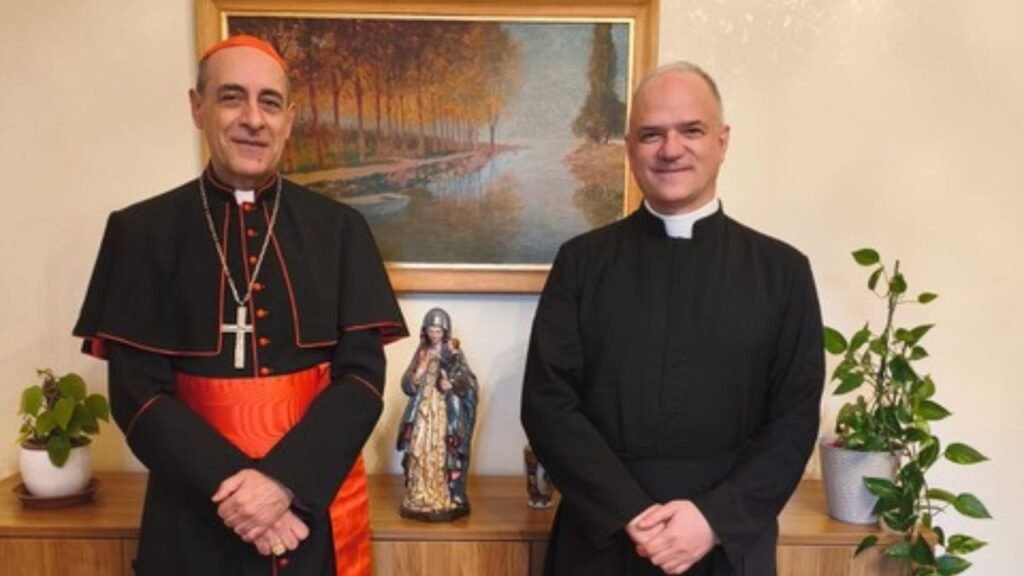
In a statement following a Feb. 12 meeting between Cardinal Víctor Manuel Fernández, prefect of the Dicastery for the Doctrine of the Faith, and Father Davide Pagliarani, the SSPX’s superior general, the dicastery said the two sides agreed on a “specifically theological” process with a defined methodology to address questions it said have not yet received sufficient clarification.
The dicastery also warned that if the SSPX proceeds with episcopal consecrations it has announced for July 1 without authorization from the Holy See, the move would “imply a decisive rupture of ecclesial communion (schism),” carrying “grave consequences” for the fraternity as a whole, and would bring the dialogue to an immediate end.
The statement did not explicitly mention excommunication, which canon law prescribes for all bishops involved in episcopal consecrations with a papal mandate.
The dicastery said Pagliarani told Vatican officials he would present the proposal to the fraternity’s council and later communicate a response. If the response is positive, the statement said, both sides would jointly establish the steps, stages, and procedures to follow.
The SSPX did not immediately respond to a request for comment from EWTN.
What the Vatican says the talks would cover
According to the dicastery, the theological dialogue would address contested questions tied to the interpretation of post–Second Vatican Council teaching, including God’s will regarding the plurality of religions; the distinction between an act of faith and “religious submission of mind and will”; and the differing levels of assent required by various Vatican II texts and their interpretation.
The underlying issue is whether the SSPX must accept Vatican II as doctrinally binding, or whether it can treat it as primarily pastoral and therefore open to critique.
The dicastery also said the discussions would seek to identify “minimum conditions” required for full communion with the Catholic Church and, consequently, for outlining a canonical status for the SSPX, alongside other questions to be studied further.
Why the meeting happened now
The meeting followed Pagliarani’s Feb. 2 announcement that the SSPX intends to consecrate new bishops on July 1, arguing the move is needed to preserve continuity.
The consecrations would reportedly be carried out by Bishop Bernard Fellay, Pagliarani’s predecessor as superior general, with Bishop Alfonso de Galarreta as co-consecrator. Pagliarani has said an exchange of letters with the Holy See did not produce the response the fraternity sought.
The shadow of 1988
The Vatican warning recalls the 1988 rupture, when Archbishop Marcel Lefebvre consecrated four bishops without a pontifical mandate after negotiations with Rome collapsed, triggering a formal declaration of excommunication and a long-running break in full communion.
In 1988, a solution had appeared within reach after an agreement would have given the fraternity a recognized place in the Church and permission to celebrate exclusively the traditional Latin Mass, in exchange for acceptance of Vatican II and recognition of the validity of the reformed rites. Lefebvre ultimately proceeded with the consecrations anyway.
Benedict XVI later lifted the excommunications of the bishops consecrated in 1988 in 2009. Under Pope Francis, the Holy See extended certain pastoral faculties to SSPX priests, while also restricting broader use of the traditional Latin Mass through the motu proprio “Traditionis Custodes.”
This story was first published by ACI Stampa, the Italian-language sister service of EWTN News. It has been translated and adapted by EWTN News.