As the Church continues to reflect on the celebrations of Corpus Christi held across the world last week, the feast’s central message remains unchanged: Christ is truly present in the Eucharist.
The Eucharist: More Than a Symbol
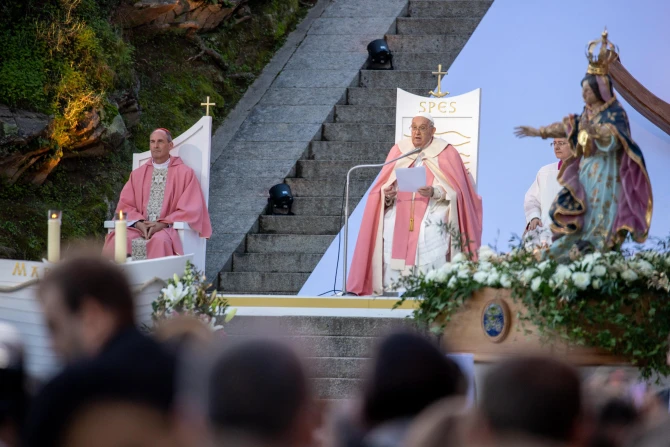
The annual solemnity, which brought thousands of faithful into the streets of Rome in Eucharistic processions and public acts of devotion, points Catholics back to the mystery celebrated at every Mass. While the external celebrations have concluded, the reality they honor continues daily on altars throughout the world.
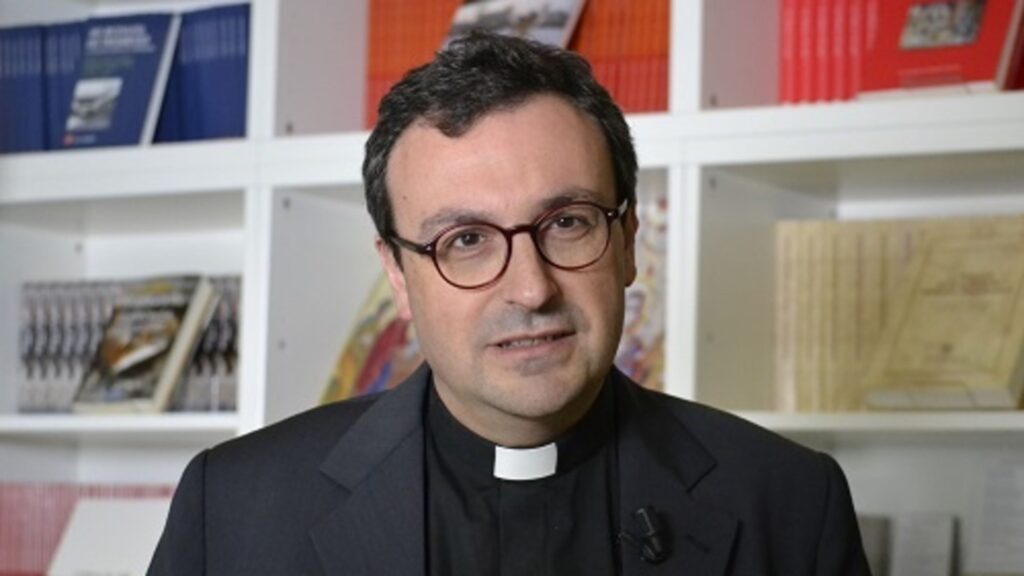
Father Michael Baggot, LC, invited professor of theology at the Pontifical University of St. Thomas Aquinas, explained that the Eucharist is not merely symbolic but a true transformation brought about by Christ himself. He noted that “at the words of consecration pronounced by the priest, acting in the person of Christ, the very substance of the bread and wine is transformed into the body and blood of Christ.”
For Catholics, this transformation—known as transubstantiation—is at the heart of Eucharistic faith. Father Baggot pointed to the reflections of the early Church Fathers, who understood that if God is powerful enough “to bring something out of nothing to create from no pre-existing matter,” then He is also capable of transforming bread and wine “into something that is essentially different, into his very body and blood.”
This gift, he explained, is given so that believers may draw closer to God, be nourished by His life, and “enter into his very life and be elevated through this communion.”
A Mystery That Requires Faith
The mystery of the Eucharist has challenged believers since the earliest days of Christianity. In the Gospel of John, Jesus’ teaching about eating His flesh and drinking His blood proved difficult even for many of His disciples.
Reflecting on this passage, Father Baggot observed that after Jesus spoke about His presence in the Eucharist, “many disciples departed and Jesus allowed them to depart.” Christ did not retract His teaching or explain it away as a metaphor. Instead, the moment became a test of faith.
Father Baggot suggested that St. Peter’s response remains the model for Christians today. Faced with a mystery beyond human comprehension, Peter replied, “Lord, to whom else should we go? You have the words of eternal life.”
According to Father Baggot, Peter was essentially acknowledging that while he did not fully understand how Christ’s promise could be fulfilled, he trusted the Lord’s word and power. That same trust continues to sustain the Church’s belief in the Real Presence of Christ in the Eucharist.
An Angelicum Tradition Rooted in Eucharistic Devotion
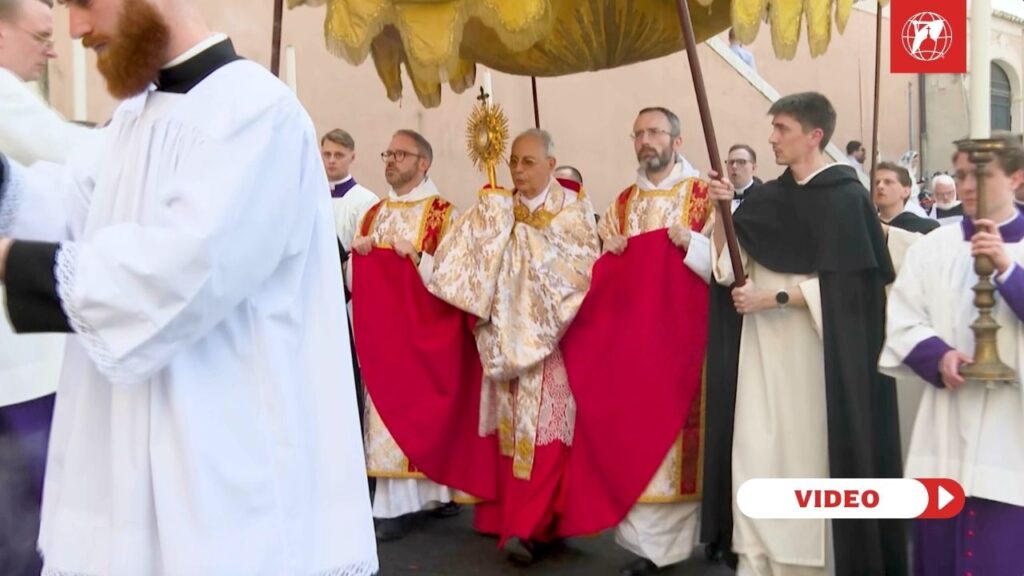
Among Rome’s many Corpus Christi observances last week was the annual Eucharistic procession of the Pontifical University of Saint Thomas Aquinas, known as the Angelicum. Students, professors, clergy, and religious gathered to mark the feast and celebrate a significant milestone: twenty-five years of student-led Eucharistic adoration at the university.
The celebration was led by Cardinal Dominique Mamberti, Prefect of the Apostolic Signatura, who reflected on the connection between belief in the Eucharist and belief in Christ’s Resurrection.
In his homily, the cardinal emphasized that “we recognize Him truly present under the Eucharistic species” and stressed that the Eucharist stands as a witness to the reality of the Resurrection itself. As he explained, “if Christ is not present in the bread and wine of the Eucharist, it means that He is not risen,” echoing St. Paul’s teaching that without the Resurrection, “our faith is in vain.”
The Angelicum’s strong Eucharistic culture is deeply tied to the legacy of its most famous theologian, St. Thomas Aquinas. The Dominican saint’s writings continue to shape the Church’s understanding of the Eucharist and form generations of priests, religious, and lay students.
Father Thomas Joseph White, OP, Rector of the Angelicum, described Aquinas as a theologian who “wrote the most profound treatises on the Eucharist, by most measures, you know, in the history of the Church.”
He explained that studying Aquinas allows students to develop “a deeper appreciation of the Eucharist” while also equipping them to explain and share the mystery with the modern world as “missionaries of the 21st century.”
A Living Encounter with Christ
For many students at the Angelicum, Eucharistic devotion is not confined to academic study. For a quarter century, student-led adoration has offered a place of prayer and encounter with Christ throughout the university day.
Marcia Vanderstraaten, a theology licentiate student, has witnessed the fruits of that apostolate firsthand. Although she has been at the university only a few years, she said she has already seen “more and more people coming to know Jesus and coming to grow in their faith” through time spent before the Blessed Sacrament.
She added that the experience has strengthened not only her fellow students but also her own spiritual life, saying that “it’s definitely had an impact on me as well.”
As the Church waits for the celebrations of Corpus Christi to come around every year, the witness of the Angelicum community serves as a reminder that the feast is not simply a yearly event. Rather, it points to a living reality that Catholics encounter every day in the Eucharist—a mystery that continues to nourish faith, inspire devotion, and draw believers into deeper communion with Christ.
Adapted by Jacob Stein.