If you could live forever, would you? If you could have all the knowledge accumulated by humans readily available to be downloaded into your brain, would you?
These are some of the questions being posed by transhumanists. Transhumanism is a philosophical and scientific movement that advocates the use of current and emerging technologies—such as genetic engineering, artificial intelligence and nanotechnology—to augment human capabilities and improve the human condition.
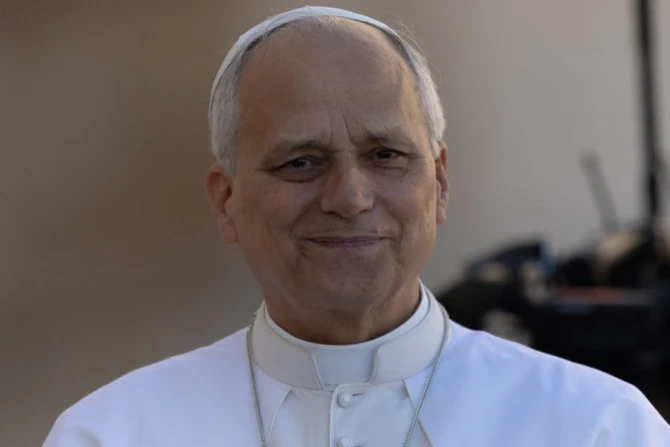
Fr. Michael Baggot is a professor at the Regina Apostolorum here in Rome who has researched on transhumanism. We spoke to him about the goals of transhumanism and what the Church can teach us about man’s quest for technological answers to what seem to be spiritual questions and needs.
Father Michael Baggot, thank you so much for being with us today.
It’s a pleasure, Ben. Thanks for having me.
And so, my first question is, what is transhumanism? And why should the church be focused on this new scientific movement?
Great question. So, I like to go back to Nick Bostrom, who is a professor at Oxford University. And years ago, he wrote a frequently asked question, FAQ document about transhumanism with some of the leading transhumanist thinkers. And he lays out very clearly that Transhumanism is fundamentally an intellectual and cultural movement that is focused on radically enhancing human capacities, especially our cognitive abilities, our physical attributes, our moods, emotional life, also, possibly our moral life, and our lifespan, maybe even reaching immortality, a digital immortality. But this radical enhancement is itself a transition that points us forward to an eventual post human state, we will have a superior species, a completely dis embodied species separated from this kind of lump of flesh.
And so, Father, this all sounds very almost kind of science fiction-esque. What does the church teach about this, this desire to kind of always progress ourselves or change ourselves or transform ourselves to a point where we become unrecognizable?
Yes. So, the church has just begun to reflect on this issue. And I would say that we have a great patrimony of reflection that we need to creatively apply to this very new issue. First off, the church can help us in reminding all people of their call to immortality, we should not settle for just this life. We should not settle for just a world of sickness, suffering, aging and death, we should seek for something more, something better. But we’re convinced that Jesus Christ has provided a path not just to a quantitative extension of more of this life, but actually a qualitative elevation, that through the life of grace, we reach this supernatural state. So, I often in dialogue with transhumanist say that their problem is not that they want too much, and the church is here to stop them, or prevent them from ambitions, but rather that they want too little. They’re settling for too little. So, the church gives us many tools to really think critically about biotechnology, but also to keep our eyes fixed on a transcendent, supernatural call.
And Father, these trends in this research, how close are we to arriving to certain other goals?
Well, it’s interesting, you look at some thinkers like Ray Kurtzweil, who was working at Google as an engineer there, and he speaks of 2045, the year 2045 as the year of the singularity, the year where man and machine will merge will achieve super intelligence machines will be able to replicate themselves, and we’ll have this huge breakthrough that will lead us to eternal life. Now, if you look at some of the steps along the way, we seem to be lagging behind the general plan. Because this is not something that Kurtzweil or Martine Rothblatt or other advocates expect to happen overnight, they think that we’ll first get to a greater brain computer interface. We See the initial stages of that. But it’s still only at the beginning, then eventually, we’re supposed to get to a point of transferring a human brain to another body or a robotic structure. To my knowledge, we haven’t reached that point yet. And then we’re supposed to get to the point of mapping out all of your data, tracing your neurons, tracing your memories, your experiences, your desires, your intention, getting that data, extracting it, in a sense, downloading it, and then transferring a personal file of you, Ben, to a new system, maybe even eventually to the network, in which case, you’re not bound by anybody or structure. So, all of that to say that we’re at really the very initial stages of what has been promised. And I’m not holding my breath for digital immortality. In fact, I think there are serious philosophical problems with that, because our lived experience is as a bodily creature, we have sensations and those sensations shape, what we think about when I get to the higher level of conceptual thought, it’s always informed by very particular sensations. I don’t think about dog in the abstract, until I’ve seen and smelled and interacted with real life Golden Retrievers, and one particular golden retriever who’s barking a few feet behind my left ear. Right? So, we have these very concrete sense experiences, and those form and shape our higher-level thoughts. So, I think that any project that tries to save humanity by removing an essential aspect of humanity, namely our bodyliness is doomed to failure.
Well, this is all very fascinating. Thank you so much, Father Michael.
My pleasure. Thanks for having me, Ben.