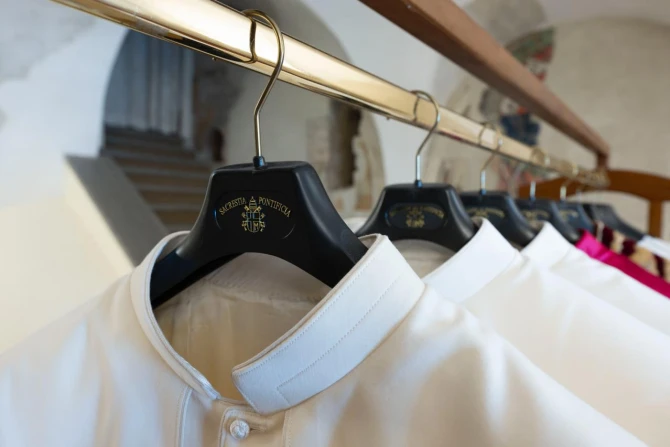
The newly elected pope will leave the Sistine Chapel at the conclusion of the conclave and walk into a small antechamber, known as the “Room of Tears,” to be vested into his papal attire for the first time.
SIGN UP FOR OUR NEWSLETTER HERE
Here is a list of the garments you may see the new pope wearing once he steps out onto the central balcony of St. Peter’s Basilica to greet the people and impart his first “urbi et orbi” blessing:
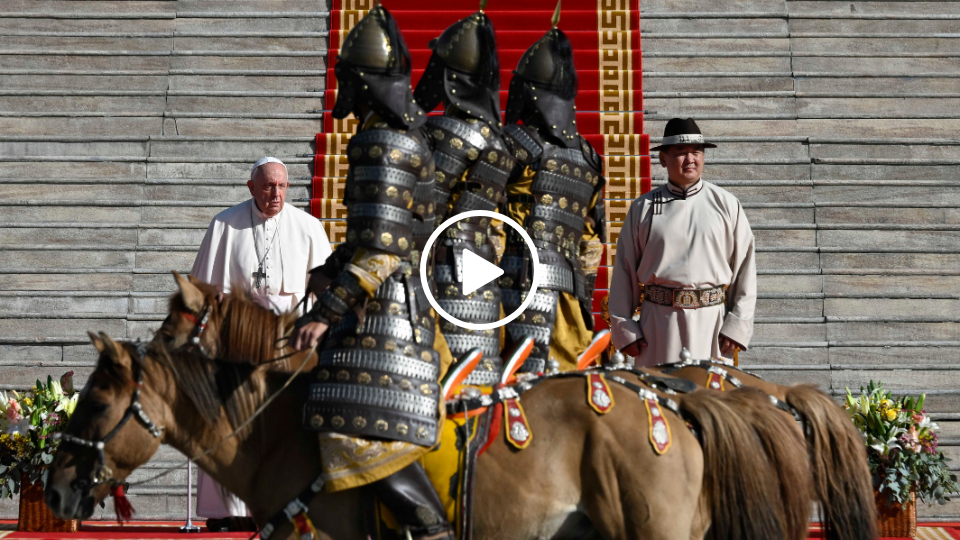
The white skullcap — also known as a “zuchetto” or “pileolus” — covers the front and back of the pope’s head, signifying the authority of the pontiff above other prelates. It has an ecclesiastical history that dates back to the 13th century and is similar to the brimless hat worn by ancient Romans.
The white cassock — a long-sleeved, ankle-length garment — is tailor-made from 100% wool or a wool blend that signifies the innocence, charity, and holiness of the papal office, according to 13th-century French Bishop William Duranti. Cassocks, which have historical links to the Roman robe known as the “caracalla,” are traditionally made with 33 buttons to represent the 33 years of Jesus’ life before his resurrection and ascension into heaven.
A white sash made of linen or silk, also called a “fascia,” is worn over the cassock just above the waist and represents the pope’s devotion, dedication, and submission to Jesus Christ’s call to serve and look after his Church. The fascia is a symbol of readiness to minister to the people of God.
A white shoulder cape or “pellegrina” attached to the cassock is worn over the pope’s shoulders. This garment can also be worn by cardinals, bishops, and priests, but only the pope can wear the pellegrina, which resembles the capes worn by Catholic pilgrims in the past, in white.
The white rochet is a knee-length garment worn over the cassock that is used by prelates as an indicator of their clerical ranking and a physical reminder of their call to serve the Church. It is used for nonliturgical ceremonies and symbolizes the dignity and spiritual purity of the one who wears it.
A white surplice, a loose linen or cotton vestment worn over the rochet, symbolizes the white robe of baptism and rebirth into the life of Jesus Christ. The white or ivory color represents the spiritual purity, holiness, and humility of the cleric who wears it.
A red cape, known as a “mozetta,” which falls at the shoulders, symbolizes the pope’s authority and his call to compassion.
The pectoral cross suspended by a gold cord is worn over the mozzetta near the pectoral muscle that protects the heart. In a gesture of sorrow for sin — or “peccatum” in Latin — you beat your breast since it is through the crucifixion of Jesus Christ that hearts are reconciled to God and sins are forgiven, explained Bishop Austin Anthony Vetter of Helena, Montana, in a 2020 video posted by the diocese on Facebook.
The fisherman’s ring is placed on the pope’s finger following his election as a sign of his reign as the new pontiff and successor of St. Peter.
A red stole with golden embroidery is worn over the shoulders. This garment represents the pope’s priestly consecration and responsibility to lead the Church as a good shepherd who carries his sheep on his shoulders and bears the yoke or “sweet burden” of Jesus Christ.
A pair of red leather shoes has been used by several popes over the centuries and has its origins in the early Church and the ancient Roman Empire.The color represents the passion of Jesus and the blood of martyrs, according to Liturgical Arts Journal founder Shawn Tribe.
This article was originally published on Catholic News Agency.