Global fertility rates are declining, affecting even predominantly Catholic countries, which historically maintained higher birth rates. This trend threatens to reduce populations below sustainable replacement levels.
Investing in younger generations is vital to counter this demographic decline. This was the focus of the 4th “Stati Generali della Natalità” (General States of Birth), themed “Being There – More Youth, More Future.” The event, held on May 9th and 10th at the Conciliazione Auditorium in Rome, highlighted the importance of prioritizing youth to ensure a balanced future.
Fr. Shenan Boquet, president of Human Life International, explained the procedure of this event, saying, “One thing we did in our breakout sessions was to separate them into groups from West, Central, and Eastern Europe to get a good cross-section. I posed three questions to them: How do we address the social, political, and cultural problems that we see? And the most common thread that ran through all of them was the assault on the family.”
In Italy, the number of individuals aged 15 to 49 — the fertile age group — has fallen sharply to 11.5 million from nearly 14 million in 2011. Additionally, over two-thirds of Italians aged 18 to 34 still live with their parents, compared to half across the rest of Europe. Furthermore, eight out of ten couples face challenges that hinder their plans to start a family.
Gigi De Palo, president of the Foundation for Birth and organizer of the General States, argues that the issue of low birth rates in Italy fundamentally concerns freedom. He notes that in Italy, having a child is a significant contributor to poverty; women often cannot freely choose between motherhood and career, and youth face low employment rates and job instability. He emphasizes that temporary incentives are insufficient and calls for structural reforms such as the family quotient. With these changes, he believes Italy can address its demographic challenges effectively.
“We’ve lost a sense of how to speak a common language,” Fr. Boquet noted. “What is marriage? What is the beauty of children today? People think of children as, you know, a burden, a difficulty, or financial concern, but that’s not how we approach this wonderful gift of family life.”
Global fertility has been falling for decades, with the problem often most acute in industrialized nations with higher standards of living. Meanwhile, fertility rates in many developing nations with strained resources, especially in sub-Saharan Africa, continue to climb.
One observer from Ireland commented, “The battle, the culture wars are enormous in Ireland, and we have seen plunging birth rates, increased abortion rates, marriage breakups through divorce, and now a big push for euthanasia. And in many ways, it’s a manifestation of how Ireland, as most of the world, is slowly turning away from God, the source of all life.”
Many of the world’s most developed countries are well below the “replacement rate” of fertility — generally about 2.1 births per woman over her lifetime — needed to keep a population stable, according to data gathered by the World Bank.
Another observer from Latvia underlined, “Many children were brought up without fathers, and our society is still now without strong, good fathers. And this is one problem, and a second problem is also economic. Because the difference between the economy and life standards in our region and West and North Europe is very big, and this creates emigration.”
“I also want to say,” an observer from Croatia commented, “that one of the problems is also the depopulation. I mean the demographic picture. Young people don’t see the future in our country.”
Catholic populations have for years been associated with high fertility rates, owing in part to the Church’s forbiddance of artificial contraception and its long-held teaching that children are, in the words of the Second Vatican Council, “the supreme gift of marriage.”
“Well, the church,” continued the observer from Ireland, “and Paul VI’s encyclical Humanae vitae said that God called the Church to proclaim with a humble firmness the entire moral law. And at the heart of that fight, at the heart of that proclamation of the gospel, is the proclamation that marriage and the beautiful act of intimacy between husband and wife are exclusively for husband and wife and no one else and that every act within the contact of marriage is open to life. So that bear is the kernel, the solution to the culture of death we’re seeing.”
A 2012 study by the National Bureau of Economic Research revealed that strongly Catholic countries in Europe had fertility rates nearly half a child per woman higher than their non-Catholic counterparts in the early 1970s.
However, by the end of the 20th century, these rates had fallen below those of non-Catholic countries. The study suggests that this decline was due in part to the Catholic Church’s reduction of family-friendly services like education and healthcare starting in the mid-1960s, which increased the costs of child-rearing. Additionally, polling indicates that a significant majority of Catholics now accept birth control, and many Catholic women use artificial contraception.
In response, Church leaders have increasingly raised concerns about falling fertility rates recently.
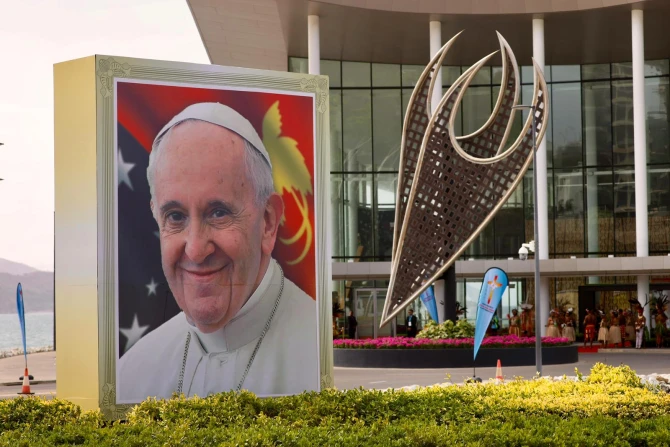
The Holy Father has described the low number of births as “a figure that reveals a great concern for tomorrow.” He has criticized what he describes as the “social climate in which starting a family has turned into a titanic effort, instead of being a shared value that everyone recognizes and supports.”
“A family of faith where God is the heart of the family and to really work as a family, support as a family, and much, much of my vocation was really nourished in that environment. To see the need to care for the elderly and the sick. And this is what we have to raise,” Father Boquet exhorted.
Voices gathered at the Fourth “General States of Birth” underline the critical need to heed the Holy Father’s call and cultivate a society that values and supports families, ensuring a healthier future for coming generations.
Adapted by Jacob Stein
SUBSCRIBE TO OUR NEWSLETTER TO GET EXCLUSIVE CONTENT, UPDATES AND INFORMATION FROM THE VATICAN