COMMENTARY: The Latin Patriarchate is committed to a lasting peace and caring for all citizens in the war-torn region.
Since the beginning of the latest war in Gaza in October 2023, the Catholic Church in the Holy Land has provided humanitarian and spiritual aid in response to the enormous needs resulting from the mass destruction and loss of innocent life.
This support reached not only the members of the Christian community sheltering at the two main churches there but extended to hundreds of thousands of our immediate neighbors. Now, after two years, is a lasting peace possible?
If history continues to repeat itself, then we need to be pessimistic; this may merely be a pause that will be followed by new rounds of violence, meaning the endless vicious cycle will continue.
As people of faith and hope, we must continue to pray that this time will be different and will put the combatants on a road to sustainable peace, justice and equality so the people of our region can live in dignity.
However, unless the root causes of the Israel-Palestine conflict are addressed, I am afraid there will not be much hope for a new “day after.” After all, this conflict goes back a lot farther than Oct. 7, 2023.
There was great relief when the latest ceasefire was declared, especially for our brothers and sisters in Gaza. They commented that it was a blessing to sleep at night without the sounds of explosions around them. All of a sudden, the nights are quiet!
That welcome respite did not last for long, however, as for most of those sheltering at the Holy Family Church complex, this was the first time they were able to venture out and check on their homes and other belongings. Despite the fact that 90% of the buildings, infrastructure and road networks were practically erased, they dared to hope their own homes were among the 10% that still stand. The discovery that the areas where they once lived are now unrecognizable created a new trauma for them. Nothing they were accustomed to before the war survived; not their homes, roads leading to them, the shops they went to, the schools, universities, clinics and hospitals.
Dreams shattered, and memories were erased. Yet I never heard from any of them anger or a call to revenge. They were all thankful for what remains and the fact that they still have the church buildings to return to and have a roof over their heads for now.
Since the beginning of the war, the position of the Catholic Church has been crystal clear: We will not encourage people to stay or leave. This was always considered a personal choice, and no one should be in any position to judge.
For those who decide to leave, we wish them the best of luck as they try to start a new life in a foreign land, which is not always welcoming to new refugees. For those who decide to stay, they are family to us, and we will try to care for them within all the means available to us.
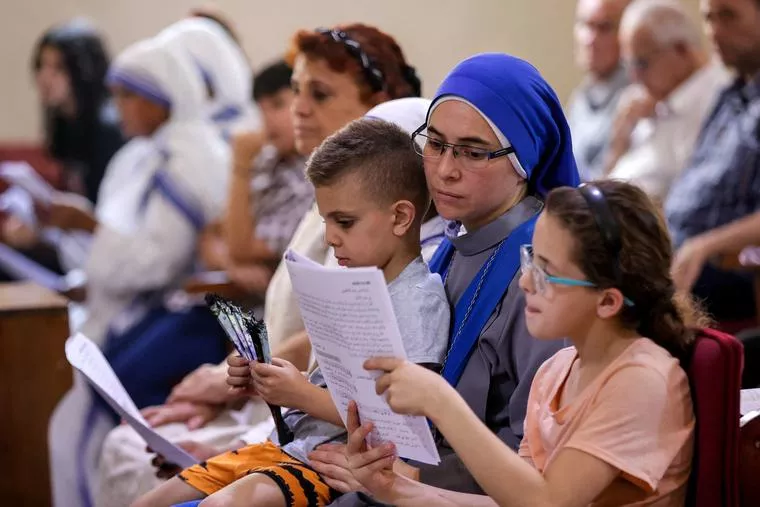
It was clear that during the war we did everything in our power to provide them with shelter, food, water, medicines when possible, personal items and whatever essential items we had access to. More importantly, what the Church was able to provide through three priests and six religious sisters belonging to various Catholic congregations was spiritual accompaniment during a time of war.
To be able to shelter in a church compound with daily Masses and continuous accompaniment intended to strengthen the faith so that they will continue to be hopeful was probably the greatest accomplishment of it all. All of the priests and sisters are our heroes for what they have done and will undoubtedly continue to do as we plan for what comes next.
Under the inspiring leadership of His Beatitude Cardinal Pierbattista Pizzaballa, Latin patriarch of Jerusalem, we have big plans and dreams for Gaza. We will certainly reestablish our presence in education by rebuilding our schools so that they continue to spread the Christian values of love, peace, forgiveness, coexistence, tolerance and respect among others — values that will be more needed than ever before. We will do whatever is in our power to continue the humanitarian support, as well as establish with our partners a presence in health care through establishing clinics and helping rebuild that sector. As we have done in the past, we will promote housing and job-creation opportunities, as the need for both is so great.
The local Church has always emerged stronger after wars and will undoubtedly remain strong and position itself to provide maximum support after the war, as it did during the fighting. Our presence in education, health and social services will continue and grow, without any doubt. All of it will be done with Christian charity at the core so that the polarization, hatred and urge for revenge can be turned into a shared future for all who call the Holy Land home.
No one side will be able to erase the presence of the other, and eventually all will come to that realization and carve a future filled with peace, justice, a life in dignity and prosperity for all. Is that day close? Only history will tell, but our commitment will never fade away!
This article was originally published on National Catholic Register.