Skip to content

Vatican calls for assessment of synodality implementation ahead of 2028 assembly

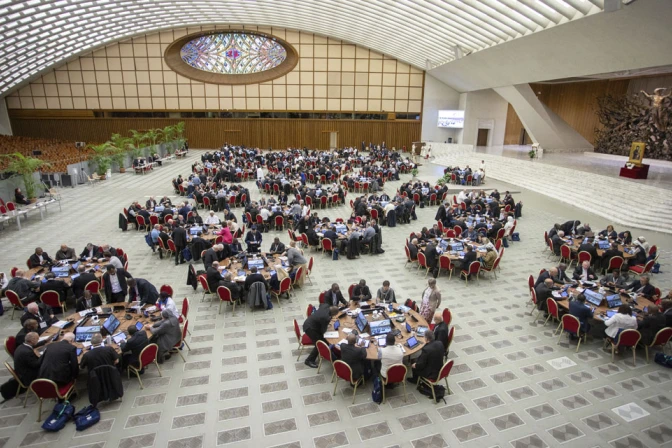
Participants of the Synod on Synodality in the Paul VI Audience Hall. | Credit: Daniel Ibáñez/EWTN News

The General Secretariat of the Synod published the “Recollecting” resource for diocesan synodal teams on July 27.

Ahead of the 2028 ecclesial assembly for the Synod on Synodality, the Vatican has called on dioceses to provide an assessment of their implementation of synodality.

The General Secretariat of the Synod published the document “Recollecting” on July 27, providing diocesan synodal teams with a resource to draft their reflections on their progress since the diocesan phase began in October 2021.

In the accompanying press release, Cardinal Mario Grech, secretary-general of the synod, explained that the notes are intended to help local Churches “recollect” their synodal journey with gratitude.

“Evaluation is not a technical exercise but an experience of gratitude and truth,” Grech said. “Recollecting means recognizing what the Lord has brought to maturity in the journey of our communities and allowing ourselves to be guided towards the next steps.”

The recollecting phase is part of the 2028 preparation for synodal teams and will culminate in a broader reflection during the first half of 2027. Each diocese is to prepare two documents around that time: a narrative report and a letter to the other Churches.

The document “Recollecting” called for discussions about the challenges facing synodality at the local level, including resistance.

“Particular attention should be given to the difficulties encountered, resistance to renewal, obstacles that have hindered the journey, unsuccessful attempts and questions that remain open,” the document stated.

The recollecting phase of the synod’s implementation path is one of four preparatory stages before the ecclesial assembly in 2028. The other three are “Interpreting” in the second half of 2027, “Orienting” in the first four months of 2028, and “Celebrating” in October 2028.

This article was originally published by EWTN News English.

Receive the most important news from EWTN Vatican via WhatsApp. It has become increasingly difficult to see Catholic news on social media. Subscribe to our free channel today

Share

Would you like to receive the latest updates on the Pope and the Vatican

Receive articles and updates from our EWTN Newsletter.

More news related to this article

St. Peter’s marks 400 years with newly opened areas and digital access

The Vatican will open new parts of St. Peter’s — including the full terrace — and roll out

Pope Francis expresses sorrow over ‘spiral of death’ in the Holy Land

Pope Francis appealed for peace in the Holy Land on Sunday, calling the recent spike in Israeli-Palestinian violence

In Belgium, Pope Francis says ‘Church should be ashamed’ of clerical abuse

In Belgium’s Laeken Castle, Pope Francis confronted the Catholic Church’s long-standing clerical abuse crisis in the country, declaring unequivocally that “the Church should be ashamed” and must seek forgiveness for its failures.

What does the Synod on Synodality document say about ‘controversial’ issues?

Synod 2023 tackles contentious issues: women's roles, gender identity, and priestly celibacy, amidst historic participation by laypeople in voting

Pope Francis tells young people ‘learn how to listen’ in video published after death

In a video message published after his death, but recorded in January, Pope Francis encouraged young people to work on listening well to others.

Pope Leo XIV urges Eastern Catholics not to abandon war-torn lands

Pope Leo XIV urged thousands of Eastern Catholics from around the world, many of whom come from places experiencing violence, not to abandon their ancestral lands and assured them that he will do everything he can to bring peace there.

LIVE
FROM THE VATICAN

Be present live on EWTNVatican.com