What does Pope Leo XIV read for spiritual nourishment?
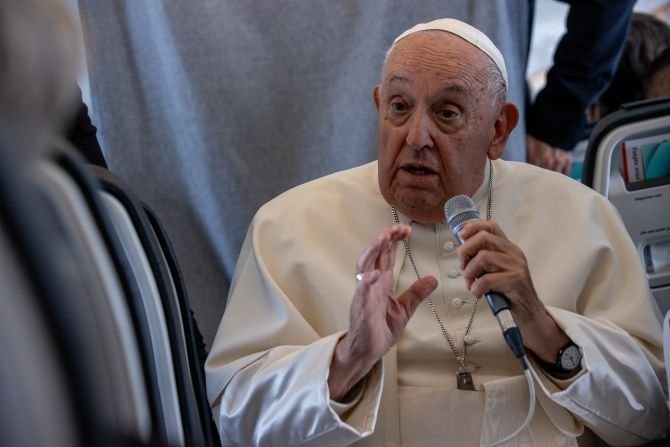
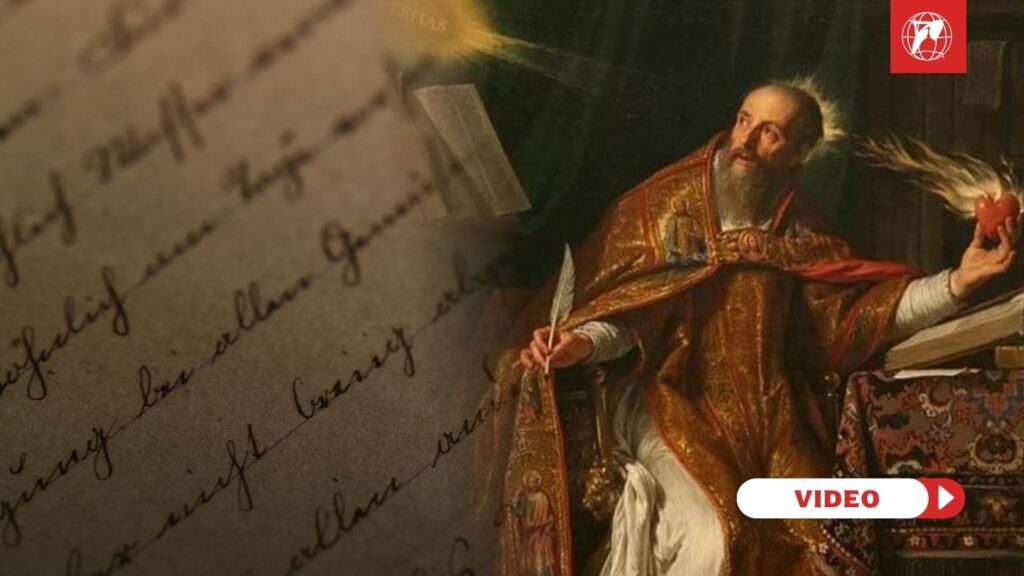
Asked about his favorite spiritual readings aboard the papal plane during his 11-day apostolic journey to Africa, the Pope pointed journalists to a text written nearly 1,700 years ago: St. Augustine’s Letter to Proba.
The letter is considered one of St. Augustine of Hippo’s great reflections on Christian prayer. Written to a wealthy Roman widow in the early fifth century, it addresses questions that remain familiar to Christians today.
What should we ask God for? How should we pray? And what does St. Paul mean when he says that “we do not know how to pray as we ought”?
For Augustine, the answer begins with the deepest desires of the human heart.
Who Was Proba?
Proba was a wealthy and influential Roman Christian.
Her life changed dramatically following the sack of Rome in 410. She fled Italy for North Africa with members of her family, including her daughter-in-law Juliana and her young relative Demetrias.
There, Proba sought spiritual guidance from Augustine, the renowned bishop of Hippo.
Fr. Kolawole Chabi, O.S.A., professor at Rome’s Pontifical Patristic Institute Augustinianum, explained that Proba had chosen to remain a widow and became an important figure in the growth of Christianity among the Roman aristocracy.
She wrote to Augustine asking about the nature of Christian prayer and how she should live her vocation as a widow.
Her question gave rise to a letter that would eventually become one of the Church’s most important early texts on prayer.
What St. Augustine Taught Proba About Prayer
At the heart of Proba’s question were words from St. Paul’s Letter to the Romans: “We do not know how to pray as we ought.”
Augustine responded by first considering the person who prays.
Prayer, in his teaching, is closely connected to desire. The Christian approaches God with a heart that longs for the true good. Prayer helps deepen and purify that desire, expanding the soul’s capacity to receive God’s grace.
But what should a Christian ultimately desire?
Augustine’s answer was the beata vita — the happy life.
This happiness is not simply getting what we want.
“Why we pray is because we seek la beata vita, which is the happy life,” Fr. Chabi explained. “This happiness does not mean to do what you want, but to do what is right and to possess God.”
In other words, the ultimate purpose of Christian prayer is God himself.
Prayer Expands the Heart
Augustine’s teaching offers a different way of thinking about unanswered prayers.
Prayer is not simply an attempt to give God information or convince him to satisfy a list of requests.
God already knows what we need.
Instead, prayer transforms the person who prays. Through persistent prayer, the heart’s desire is purified and enlarged so that the Christian becomes increasingly capable of receiving what God desires to give.
That makes the Letter to Proba remarkably relevant centuries after it was written.
The questions facing Proba may have emerged from the upheavals of the fifth century, but Christians still struggle with distraction, suffering, uncertainty and the question of how to pray.
Pope Leo XIV and St. Augustine
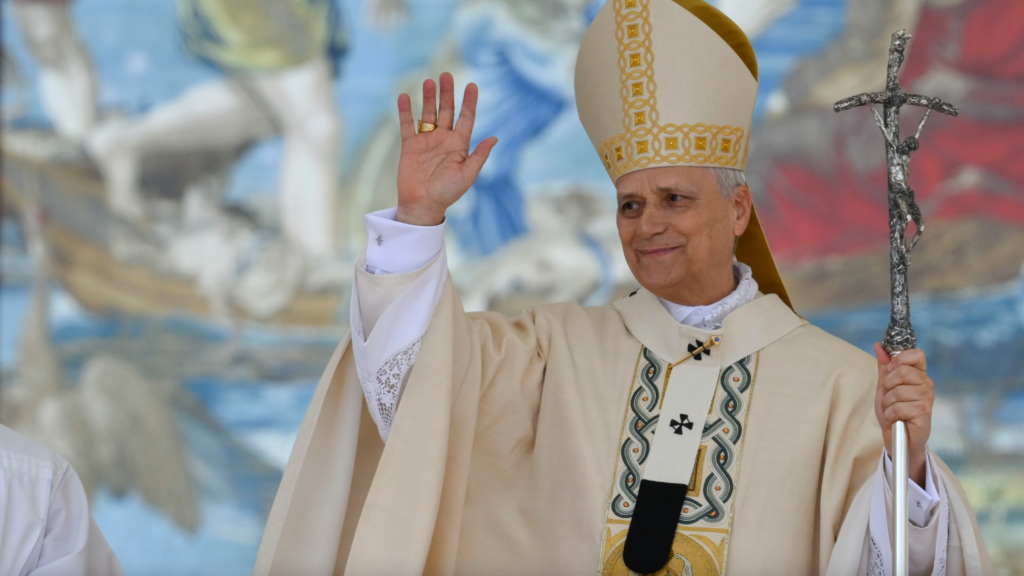
Pope Leo’s recommendation also reflects his deep connection to the Augustinian spiritual tradition.
The Holy Father has repeatedly drawn from St. Augustine in his homilies and public addresses.
He previously invoked the Letter to Proba while reflecting on another deeply human subject: friendship.
Quoting Augustine, Pope Leo recalled: “In all human affairs, nothing is truly cherished without a friend.”
But Augustine immediately recognized how difficult genuine friendship can be, asking how rarely one finds a person whose character can be trusted with complete confidence.
For Pope Leo, true friendship requires more than familiarity. It calls for genuine communion and trust.
His return to the Letter to Proba as a recommended spiritual text highlights the richness of a work that addresses not only prayer, but the relationships and desires that shape Christian life.
Why the Church Still Reads Augustine
St. Augustine died in 430, but his influence on Catholic theology is difficult to overstate.
The Bishop of Hippo is recognized as one of the great Fathers and Doctors of the Church. His writings helped shape Western Christian thought on grace, sin, Scripture, the Church, the sacraments and the spiritual life.
Fr. Chabi noted that Augustine is cited extensively throughout major Church documents.
His influence can be found in the documents of the Second Vatican Council and throughout the Catechism of the Catholic Church.
The Catechism’s section on prayer itself draws upon Augustine’s Letter to Proba.
This means the spiritual advice Augustine gave one Roman widow nearly 1,700 years ago continues to help the Church explain prayer to Catholics today.
St. Augustine’s Letters to Women
Proba was also far from the only woman who corresponded with Augustine.
The bishop wrote letters to both men and women on theological, doctrinal and spiritual questions.
According to Fr. Chabi, those letters reveal the respect with which Augustine engaged his female correspondents.
“Augustine wrote letters to women that when you read them, you find that he treated them just as equal to any man,” he said.
Augustine’s own life had also been profoundly shaped by a woman of faith: his mother, St. Monica.
Her years of prayer and Christian witness played a major role in the conversion of her son, who had spent years searching for truth before embracing Christianity.
Augustine therefore knew from personal experience the influence that a woman’s prayer and witness could have on a family.
The Family as a Domestic Church
Augustine concluded his letter by turning from Proba’s personal prayer to her responsibilities toward others.
He encouraged the widow to persevere in prayer while caring for and spiritually supporting the members of her household.
Fr. Chabi describes this as an exhortation to maintain the household as a kind of domestic church.
Prayer was not supposed to isolate Proba from the people around her.
It was meant to transform the way she lived among them.
That message helps explain why the letter has endured.
Augustine’s teaching moves from the desires of the individual heart to communion with God and then outward toward service of others.
A 1,700-Year-Old Answer to a Modern Question
When Pope Leo XIV was asked what he recommends for spiritual reading, he could have chosen a modern book.
Instead, he pointed to a letter written during the final years of the Roman Empire.
Its original recipient was a widow and refugee seeking guidance from a bishop during a period of enormous social upheaval.
Yet the question at its center has hardly changed:
How should a Christian pray?
Augustine’s answer is both simple and demanding.
Prayer teaches the heart what it should truly desire. And beneath all the things Christians ask from God lies the deepest desire of all: the desire for the happy life found in possessing God.
Nearly 1,700 years after Proba asked Augustine how to pray, Pope Leo XIV is inviting Christians to read his answer again.
Adapted by Jacob Stein. Produced by Bénédicte Cedergren; Camera by Alberto Basile; Special thanks & Credits to Pontificium Institutum Patristicum Augustinianum.