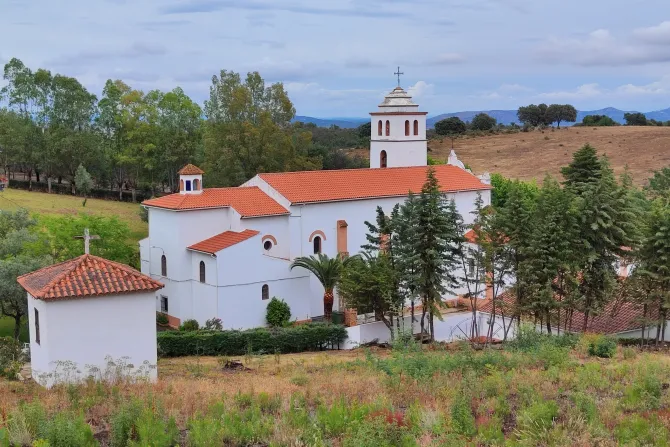
The Vatican has accepted the decree of an archbishop approving the spiritual activities of the Catholic Shrine of Chandavila in the town of La Codosera in Badajoz, Spain, where Our Lady of Sorrows is alleged to have appeared to two young girls at the end of World War II.
An Aug. 22 letter from the Dicastery for the Doctrine of the Faith (DDF) called Our Lady of Sorrows of Chandavila a “beautiful devotion,” with “many positive aspects,” including conversions, healing, and other visible signs of the action of the Holy Spirit in the pilgrims who visit the shrine.
The letter, signed by DDF prefect Cardinal Víctor Manuel Fernández and approved by Pope Francis in an Aug. 22 audience, said the shrine “may continue to offer to the faithful who wish to approach it, a place of interior peace, consolation, and conversion.”
Devotion to Our Lady of Sorrows of Chandavila springs from several alleged appearances of Our Lady of Sorrows to two young Spanish girls, 10-year-old Marcelina Barroso Expósito and 17-year-old Afra Brígido Blanco, close to the border with Portugal shortly before the end of World War II in 1945.
The DDF noted that “after the alleged visions, the two girls led a discreet and inconspicuous life. Both dedicated themselves to works of charity, especially to caring for the sick, the elderly, and orphans, thereby transmitting to those who are suffering the sweet consolation of the Virgin’s love that they had experienced.”
“There is nothing one can object to in this beautiful devotion,” the letter added.
The Vatican’s doctrinal office confirmed the “nihil obstat” judgment of the diocesan bishop, Archbishop José Rodríguez Carballo, O.F.M. In accordance with new norms on the discernment of “alleged supernatural phenomena,” the local bishop must consult and receive final approval from the Vatican after investigating and judging alleged apparitions and connected devotions.
According to the May 17 norms, a “nihil obstat” judgment means: “Without expressing any certainty about the supernatural authenticity of the phenomenon itself, many signs of the action of the Holy Spirit are acknowledged ‘in the midst’ of a given spiritual experience, and no aspects that are particularly critical or risky have been detected, at least so far.”
This story was originally published by CNA.