A Devotion Promoted by the Popes
Devotion to St. Joseph has grown throughout the Church over centuries, often encouraged by the personal devotion of the popes themselves.
One of the most well-known modern promoters of this devotion was Pope Francis, who began his Petrine ministry on March 19, the feast of St. Joseph. Throughout his 12-year pontificate, Francis frequently spoke about the quiet strength and spiritual fatherhood of the foster father of Jesus.
In one memorable reflection, Pope Francis shared a personal practice that revealed his deep trust in the saint’s intercession.
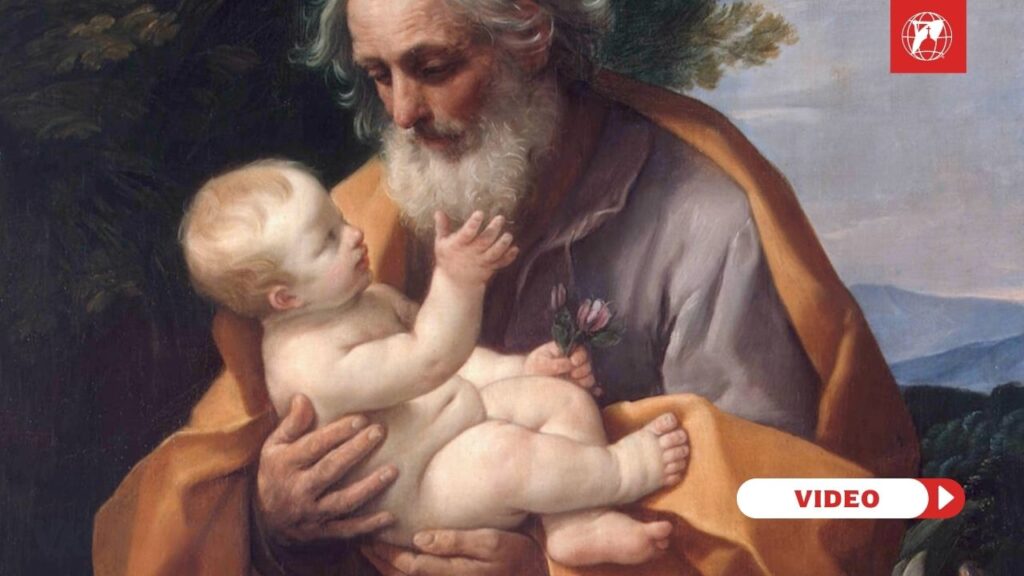
“I would also like to tell you something very personal. I have great love for St. Joseph, because he is a man of silence and strength. On my table I have an image of St. Joseph sleeping. Even when he is asleep, he is taking care of the Church! Yes! We know that he can do that. So when I have a problem, a difficulty, I write a little note and I put it underneath St. Joseph, so that he can dream about it! In other words, I tell him: ‘Pray for this problem!’”
Following Pope Francis’ apostolic journey to the Philippines in 2015, devotion to the Sleeping St. Joseph—a symbol of the saint who listened to God even in his dreams—spread widely among Catholics around the world.
The pope further strengthened this devotion in 2020, when he proclaimed the Church’s first-ever Year of St. Joseph in the apostolic letter Patris Corde (“With a Father’s Heart”). The initiative commemorated the 150th anniversary of the proclamation of St. Joseph as Patron of the Universal Church, a title given by Pope Pius IX in 1870.
The Growth of Joseph’s Devotion in the Church
The devotion to St. Joseph did not emerge overnight. According to theologian and Church historian Professor Dr. Veronika Maria Seifert, it developed gradually through the initiatives of successive popes.
She explains that Pope Pius IX took an important step early in his pontificate. “Already in 1847, a year after his election, he declared that the feast of St. Joseph should be a universal feast, because until then it had been celebrated in some dioceses, but not universally. From that moment on, it was universal. And then, of course, this impetus he gave at the beginning of his pontificate bore fruit, so that by 1870 the desire of the universal Church was truly ripe.”
Soon after, devotion to St. Joseph continued to grow through papal teaching. In 1889, Pope Leo XIII published Quamquam Pluries, the first encyclical dedicated entirely to the saint. In it, he reflected on Joseph’s protective role within the Church.
“It is, then, natural and worthy that as the Blessed Joseph ministered to all the needs of the family at Nazareth and girt it about with his protection, he should now cover with the cloak of his heavenly patronage and defend the Church of Jesus Christ.”
According to Seifert, the popularity of St. Joseph among the faithful can still be seen today in the many expressions of devotion that surround his feast days.
“Let’s think about it. How long has he been in the Church? How many statues of St. Joseph are there in the Church where people go to pray? And let’s think about the novenas before his feasts. How many people in Italy, but also in other countries, celebrate the feast of St. Joseph? If we enter the homes of families with children, how many statues and images of St. Joseph do we find? Therefore, I say yes, even today in the 21st century, we find that grain of wheat that one sowed in the ground among the faithful.”
St. Joseph in the Life of the Church
Over time, popes continued to integrate St. Joseph more deeply into the Church’s liturgical life.
In 1909, Pope Pius X approved the widely known Litany of St. Joseph, while Benedict XV included Joseph’s name in the Divine Praises in 1920. Later, Pius XII established the feast of St. Joseph the Worker on May 1 in 1955, highlighting Joseph’s dignity as a laborer and protector of workers.
The saint’s role in the liturgy grew even further under Pope John XXIII, who inserted Joseph’s name into the Roman Canon, the first Eucharistic Prayer of the Mass.
As Professor Seifert explains, “Again John XXIII. He inserted the name of St. Joseph into the canon, precisely in the first Eucharistic prayer, placing it immediately after the Virgin Mary.”
In 2013, Pope Francis completed this development by adding St. Joseph’s name to Eucharistic Prayers II, III, and IV, extending the saint’s presence throughout the liturgy of the Mass.
Learning from St. Joseph Today
Beyond history and liturgical developments, St. Joseph continues to inspire believers through the human trials he endured during his life.
Professor Seifert reflects on the many challenges Joseph faced and the spiritual lessons they offer today.
“And so now, for the upcoming feast of St. Joseph, we can see St. Joseph in his humanity. He had to respect the virginity of the Virgin Mary. Then he found his wife pregnant. So how many feelings did St. Joseph have in his heart that he had to rework? He had to flee to Egypt. He was poor and a stranger. He left everything behind. For what? For a child who was not even his own, but was indeed the Son of God, whom St. Joseph loved deeply throughout his life. And we, meditating on these feelings of St. Joseph, can learn a lot for our own lives and perhaps even put something right in our own lives.”
Through centuries of devotion, papal encouragement, and the faith of ordinary believers, St. Joseph remains one of the most beloved saints in the Catholic Church—a silent guardian whose example of humility, courage, and faithful love continues to guide Christians today.
Adapted by Jacob Stein. Produced by Alexey Gotovskiy; Camera by Fabio Gonnella.