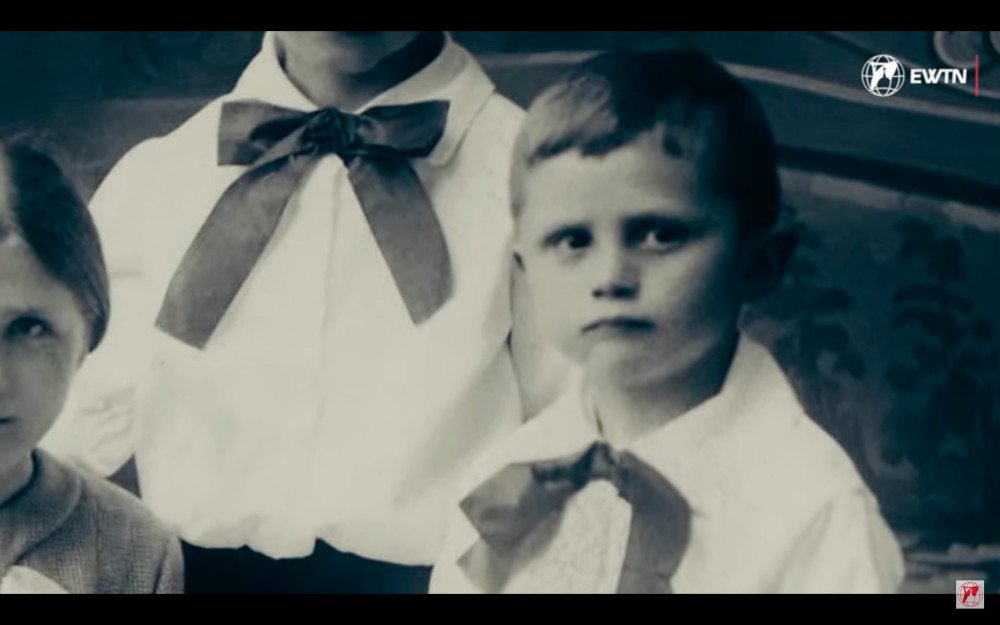
Joseph Aloisius Ratzinger was born on April 16, 1927 in “Marktl am Inn,” a small German town belonging to the district of Altötting in Upper Bavaria. It was Holy Saturday and his parents decided to baptize him the very next day: Easter Sunday.
Little Joseph was the third child of Joseph Ratzinger, a police officer and Maria Rieger, a housewife. His older siblings, Maria and Georg, would be ever present during the different stages of the life of their younger brother.
In 1937, when Joseph was 10, his father retired and the family moved to the town of Hufschlag in Traunstein, close to the Austrian border, almost 20 miles (30 kilometers) from Salzburg.
Ratzinger would remember this little city as his true home.
There he spent his childhood and adolescence, and he received the foundations of his Christian and cultural formation.
In 1939, at 12 years of age, Joseph entered minor seminary in Traunstein, where he would stay until 1942, the year in which the Nazi regime closed the seminary and destined it for military use.
But the period of his youth was not easy. The Nazi regime cultivated a climate of strong hostility toward the Catholic Church. Only his faith and education from his family would help him to confront the difficult experience of those times.
During his Apostolic Voyage to Germany in 2011, Benedict XVI remembered the Catholic Church in Germany’s incessant fight against the Nazi regime, from the beginning of the conflict.
From March of 1939 until 1945, the Law on the Hitler Youth forced all young people between 14 and 18 years of age to sign up for its ranks. Young Ratzinger didn’t escape this fate. In 1941, upon reaching 14 years of age, Joseph entered the Nazi youth movement – against his will – and continued his obligatory attendance despite the closing of the seminary in 1942.
It was precisely in this scenario where the young Ratzinger would discover the beauty and truth of the faith in Christ. In his memoirs, then-Cardinal Ratzinger would underscore the fundamental role of his family, which was ever a clear witness to kindness and hope.