Skip to content

Pope Francis moves part of Vatican library and archive to Rome seminary

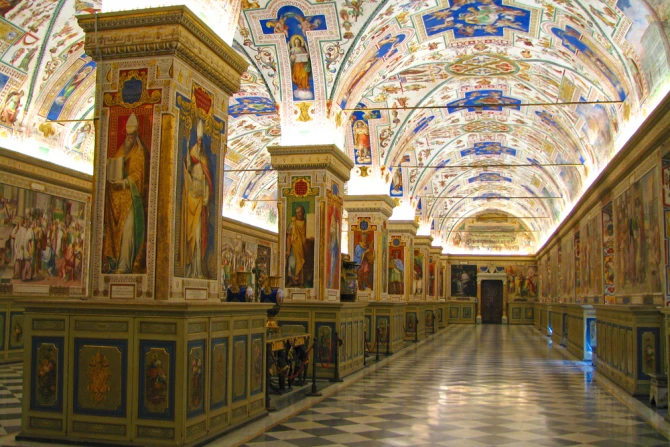
Pope Francis has called for the expansion of the Vatican library and archives to a building outside Vatican City to make more “available this precious patrimony.”

Pope Francis has called for the expansion of the Vatican library and archives to a building outside Vatican City to make more “available this precious patrimony.”

In a letter dated Oct. 29 and issued on Tuesday, the pope declared that part of the archives and library be moved to a building on extraterritorial Vatican property at the Archbasilica of St. John Lateran.

The building where the documents and books will be housed in the future is also used for Rome’s major seminary.

“The centuries-old care for the custody of the acts and documents concerning the government of the universal Church, combined with a commitment to the development and dissemination of culture, are the characteristic features of the activity of the Vatican Archives and Library,” Pope Francis wrote in a papal chirograph.

According to the letter, renovations will be undertaken to prepare the space. Francis has also asked for the creation of a commission of representatives from the Secretariat of State, the Vatican Apostolic Archives, and the Vatican Library to decide what categories of documents should be transferred to the new location.

In July, Pope Francis appointed Augustinian Father Rocco Ronzani as the new prefect of the Vatican Apostolic Archive.

Previously known as the Vatican’s “secret archive,” it contains 53 miles of underground shelving preserving documentation from historic papacies, ecumenical councils, conclaves, and Vatican nunciatures, or embassies, around the world.

The Vatican Library, according to its website, “preserves over 180,000 manuscripts (including archival units), 1,600,000 printed books, about 9,000 incunabula, over 300,000 coins and medals, more than 150,000 prints, thousands of drawings and engravings, and over 200,000 photographs.”

In its current form the library dates to the 14th century, though there is evidence the Catholic Church has had a library and archive from as early as the 300s.

Pope Leo XIII opened the archive to scholars in 1881. Qualified researchers can request permission to visit and view specific documents in both the archive and the library.

This article was originally published on Catholic News Agency.

Receive the most important news from EWTN Vatican via WhatsApp. It has become increasingly difficult to see Catholic news on social media. Subscribe to our free channel today

Share

Would you like to receive the latest updates on the Pope and the Vatican

Receive articles and updates from our EWTN Newsletter.

I agree that EWTN will keep me informed about news, faith stories and how to best support their work. You will never receive e-mails from us that you do not want to receive. You can unsubscribe any time. For more information on how to unsubscribe, our privacy practices, and how we are committed to protecting and respecting your privacy, please review our Privacy Policy.

More news related to this article

Here is Pope Francis’ schedule for World Youth Day 2023 in Lisbon

A screenshot from Pope Francis' May 4 video message to young people attending World Youth Day 2023 in Lisbon, Portugal.

Analysis: This week at the Synod on Synodality — revolution or much ado about nothing?

Synod on Synodality: Embracing Dialogue without Radical Change in Church Governance

Pope Leo XIV criticizes transhumanism: ‘Death is not opposed to life’

Pope Leo XIV on Wednesday rejected technological promises to indefinitely prolong human existence — such as those proposed

At consistory, Cardinal Zen slams synodality as ‘ironclad manipulation’ and ‘insult’ to bishops

Cardinal Joseph Zen Ze-kiun delivered a forceful critique of synodality at the extraordinary consistory of cardinals this week,

The City of Rome Celebrates the Ancient Solemnity of Saints Peter and Paul

Every year, on June 29th, the city of Rome celebrates its patron saints: Saint Peter and Saint Paul.

EXPLAINER: What happens to Pope Francis’ remains after death?

The Catholic Church has many historical customs and traditions related to the handling of a pope’s mortal remains between the time of his death and his burial.

LIVE
FROM THE VATICAN

Be present live on EWTNVatican.com