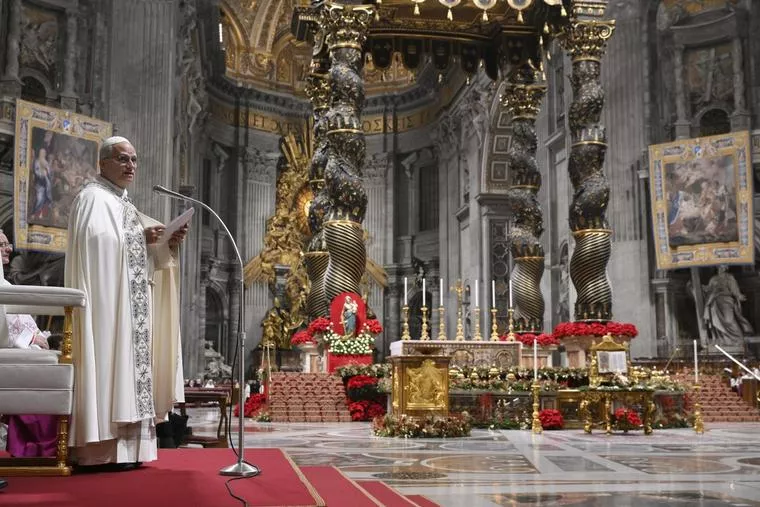
ROME — Rising on the Esquiline Hill, the Basilica of St. Mary Major is the oldest church in the West dedicated to the Blessed Virgin Mary, a living testimony to more than 1,500 years of Christian faith. For pilgrims and Romans alike, it is one of the city’s four papal basilicas and a focal point of Marian devotion.
Built in the 5th century after the Council of Ephesus solemnly declared Mary as Theotokos — Mother of God — the basilica’s walls and mosaics tell the story of salvation history from Abraham to the birth of Christ. Its golden apse and triumphal arch shimmer with early Christian art, while side chapels hold masterpieces from the Renaissance and Baroque eras.
At the heart of the basilica lies the relic of the Holy Crib, believed to be fragments of the manger where the Infant Jesus was laid in Bethlehem. For centuries, popes have come to pray here before and after journeys abroad, entrusting their travels to the Blessed Mother.
The basilica’s connection to the Incarnation is especially visible each August 5, when white petals fall from the coffered ceiling in memory of the miraculous snowfall that, according to tradition, marked the site for the basilica’s construction in the year 358.
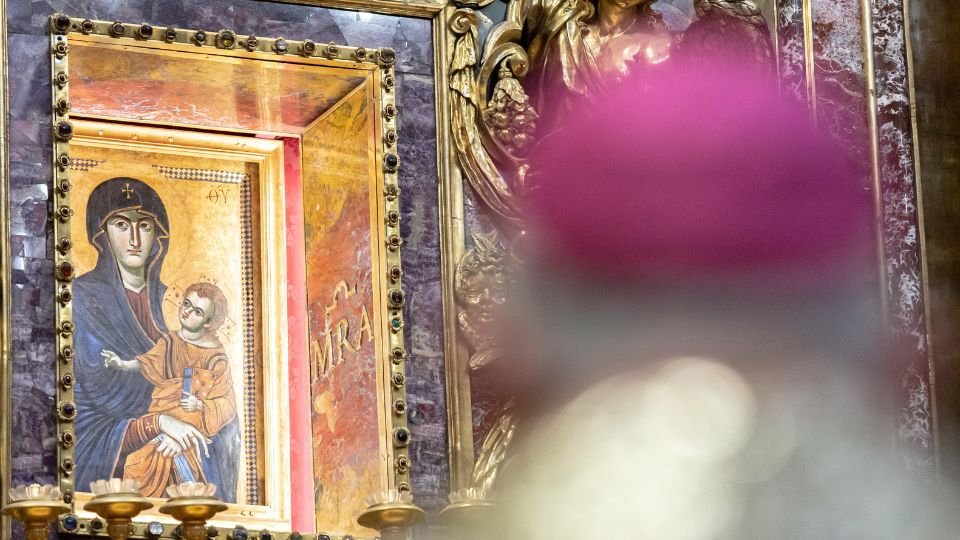
Beneath the high altar, pilgrims can kneel before the 13th-century icon of Salus Populi Romani — “Protectress of the Roman People.” This revered image has been carried in processions during plagues, wars, and moments of great need, and remains one of the most loved Marian icons in the Catholic world.
St. Mary Major is not only a treasury of sacred art and relics; it remains an active place of worship, drawing thousands daily to pray the Rosary, attend Mass, and seek Mary’s intercession. Its enduring presence in the heart of Rome is a reminder that the Church’s history is not merely preserved in stone and mosaic, but lived in the faith of those who continue to pass through its doors.
Perched atop the Esquiline Hill, St. Mary Major stands as one of Rome’s most beloved and historically rich basilicas. For over fifteen centuries, pilgrims from across the world have crossed its threshold to honor the Mother of God, to marvel at its glittering mosaics, and to kneel before relics linked to the very birth of Christ. Blending layers of art, architecture, and devotion, the basilica is not just a monument to history—it is a living witness to the faith of countless generations who have turned to Mary for guidance and protection.