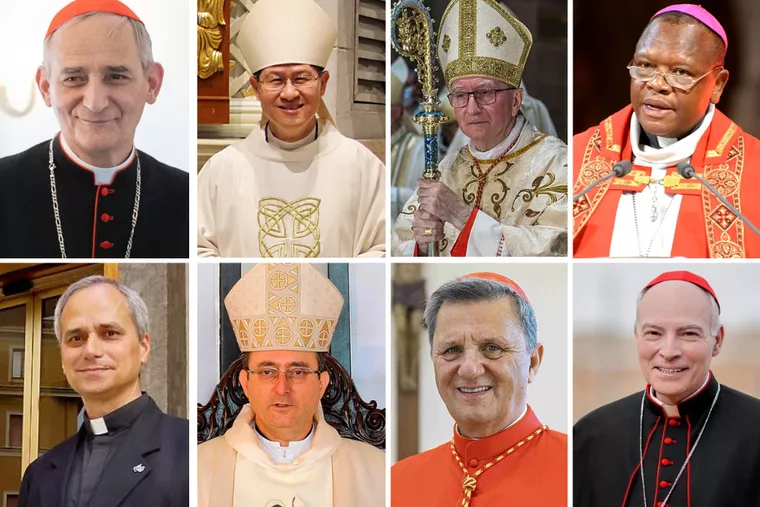
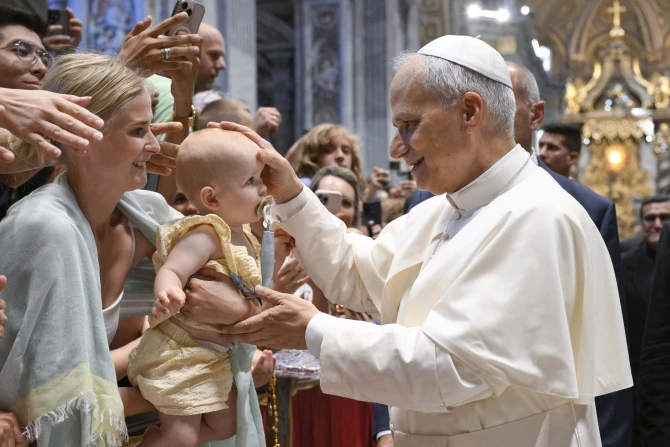
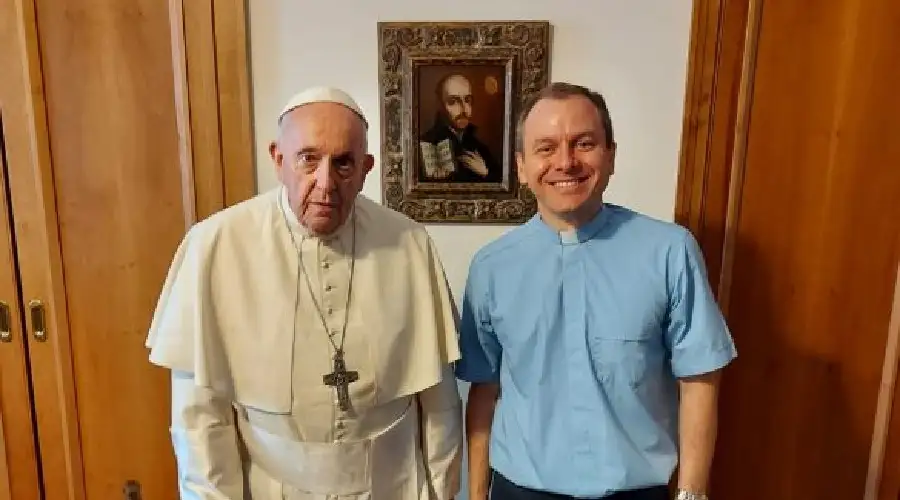
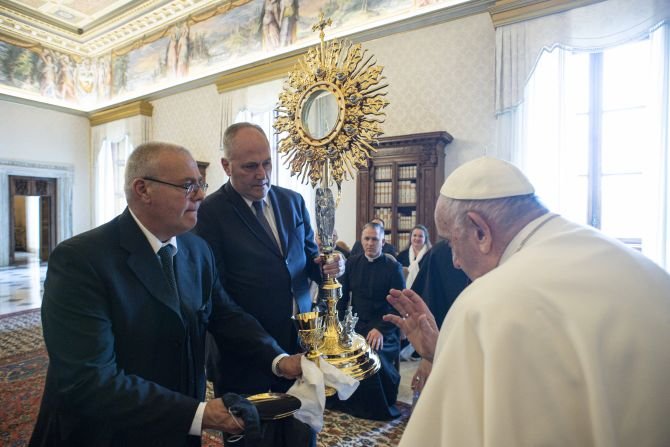
This week at the Vatican, Church leaders reflected on the credibility of Christian witness, the ethical challenges posed by emerging technologies, and the responsibilities of justice and communication in a rapidly changing world. From celebrations in Denmark honoring a foundational missionary saint, to papal messages addressing judges and journalists, the Holy Father and Vatican officials underscored the need for truth, integrity, and human dignity at the heart of the Church’s mission.
Remembering the Holocaust and Defending Human Dignity
The Vatican this week marked the 25th anniversary of International Holocaust Remembrance Day, established in 2001 and adapted by the United Nations in 2005, commemorating the liberation of Auschwitz on January 27. In a message shared on social media, Pope Leo called on the international community to reject hatred, bigotry, and antisemitism, stressing the importance of education and remembrance to safeguard human dignity and ensure that the atrocities of the past are never repeated.
Saint Ansgar’s Legacy and the Church’s Credibility
Celebrations took place this week in Copenhagen marking the 1,200th anniversary of the beginning of Saint Ansgar’s mission to Scandinavia. Speaking during the events, Cardinal Pietro Parolin, the Vatican Secretary of State, reflected on the nature of the Church’s mission and credibility in the modern world.
Cardinal Parolin emphasized that the Church’s authority does not arise from political influence or numerical strength, but from authentic Christian witness lived through justice, mercy, and liberation. He highlighted Saint Ansgar’s courageous example, recalling his efforts to redeem slaves and to live the Gospel with integrity and perseverance.
Saint Ansgar’s life, the Cardinal said, remains a model for the Church today, particularly in its call to openness in dialogue, mutual respect, and prayer. These themes were echoed by Monsignor Mads Hansen, Secretary General of the Bonifatiuswerk, which helped organize the anniversary celebrations.
Pope Leo on Artificial Intelligence and Human Communication
In his message for the upcoming 60th World Day of Social Communications, Pope Leo warned that artificial intelligence can distort reality and weaken human relationships if it is left unchecked. He underscored the need for ethical responsibility, transparency, and strong educational formation to ensure that technology remains at the service of the human person.
The Pope described the human face and voice as sacred, cautioning against any use of technology that risks replacing, rather than supporting, authentic human interaction.
Justice and Mercy in the Church’s Legal System
Addressing the Roman Rota, the Church’s highest appellate tribunal, Pope Leo XIV urged judges to maintain a deep unity between objective truth and pastoral charity. He warned against two opposing dangers: a false mercy that obscures truth, and a rigid legalism that neglects compassion.
True justice, the Pope said, must always reflect both integrity and love, remaining faithful to the Gospel while responding with genuine pastoral care.
High-Profile Vatican Legal Cases
Two major legal cases continue to unfold within the Vatican. One concerns the appeal in the financial trial involving Cardinal Angelo Becciu, while the other centers on Father Marko Rupnik, a Jesuit artist accused of sexual abuse. Both cases remain under close scrutiny as the legal processes continue.
A Call to Journalists in the Digital Age
Marking the 30th anniversary of Italy’s Porta a Porta news program on national television, Pope Leo addressed journalists with a warning about emerging dangers in digital communication. He cited fake news, “doomscrolling,” superficial curiosity, and the temptation toward triviality as growing threats to meaningful public discourse.
The Pope urged journalists to uphold truth, depth, and human dignity, and to offer quality programming that resists the erosion of authentic communication. His message served as both a challenge and an encouragement for media professionals committed to responsible journalism.