Pope Leo XIV received the prelates of the highest appellate tribunal in the Catholic Church at the Vatican on Monday, emphasizing that true justice requires a balance between truth and charity.
For the first time in his pontificate, Pope Leo XIV received the prelates of the Roman Rota in the Apostolic Palace of the Vatican on the occasion of the opening of the judicial year, emphasizing that true justice requires a balance between the rigor of truth and the compassion of charity.
In his welcoming address, Archbishop Alejandro Arellano, dean of the tribunal of the Roman Rota, which is the highest appellate tribunal in the Catholic Church, noted that every judicial decision must reflect respect for the law, the sanctity of justice, and charity toward individuals, always remembering that “only God is before our eyes” as a guiding principle.
After expressing his appreciation for the judicial role they perform, the Holy Father dedicated a lengthy address to reflecting on the relationship between the truth of justice and the virtue of charity.
After recalling that “God is love and truth,” the pontiff emphasized the “dialectical tension” between objective truth and the concerns of charity, which can lead to “a dangerous relativization of truth.”
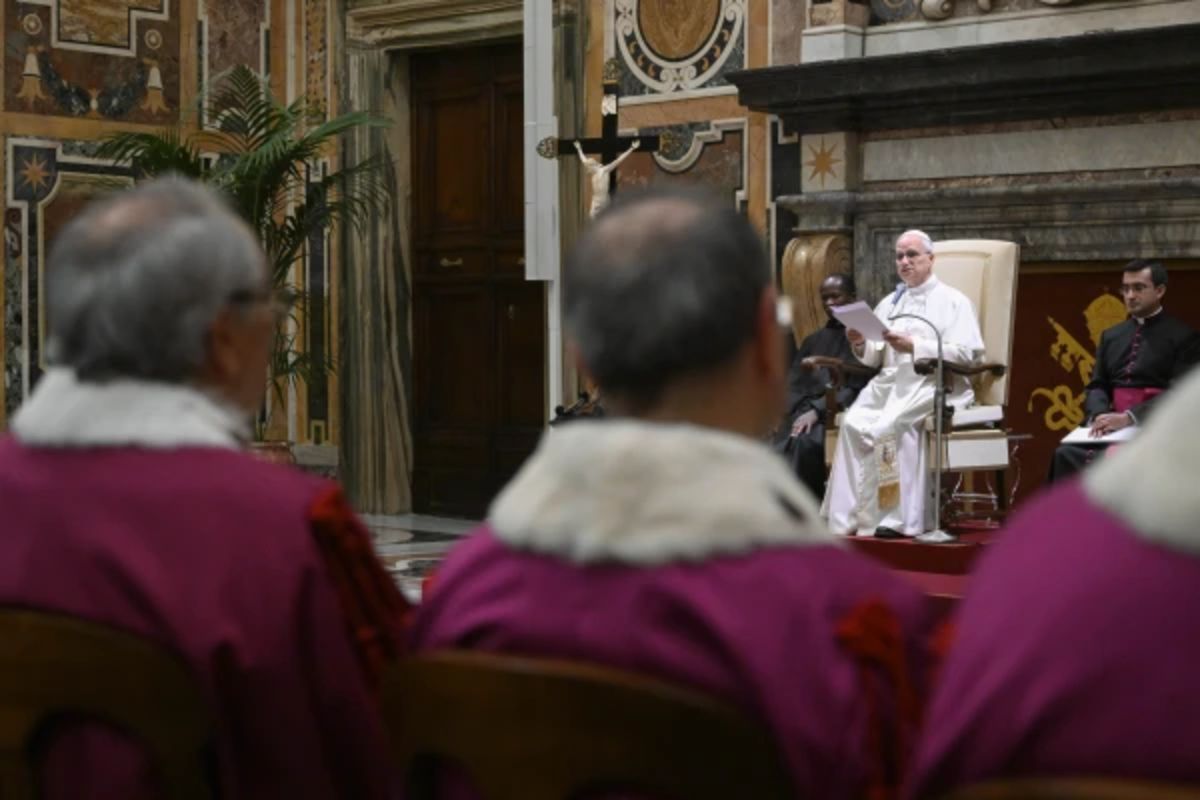
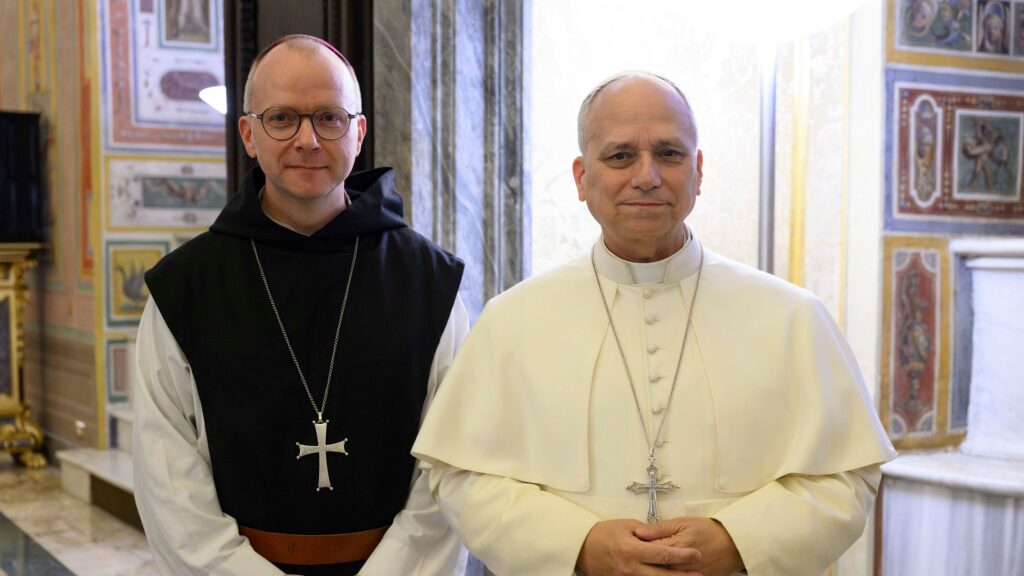
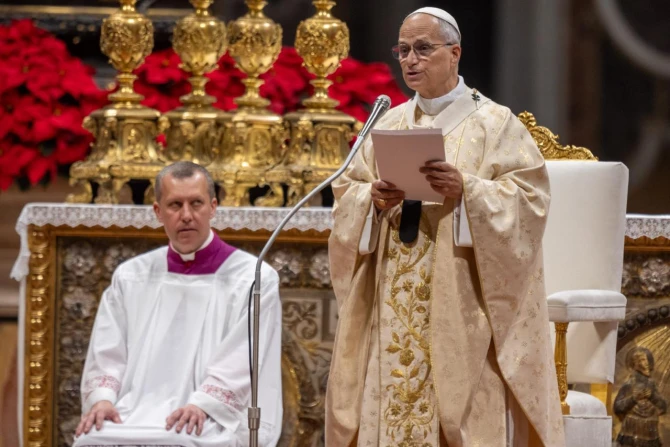
Pope Leo XIV addresses the prelates of the Roman Rota during an audience at the Apostolic Palace in the Vatican on Jan. 26, 2026. | Credit: Vatican Media
Charity, the driving force of true justice
He explained that “misunderstood compassion, even if apparently motivated by pastoral zeal, risks obscuring the necessary dimension of ascertaining the truth proper to the judicial office.”
This, according to Pope Leo, occurs particularly in the area of marriage annulment cases, and “it could lead to pastoral decisions lacking a solid objective foundation.”
Conversely, there can also be “a cold and detached affirmation of the truth that does not take into account all that love for people requires, omitting those concerns dictated by respect and mercy, which must be present in all stages of a proceeding,” he warned.
He also affirmed that the truth “must enlighten every action” and be done in charity, the “great driving force that leads to true justice.”
In light of the teachings of St. Paul and St. John, the pontiff reminded the members of the Roman Rota that their function is to be “fellow workers in the truth.” He also quoted Benedict XVI to emphasize that charity “needs to be understood, confirmed, and practiced in the light of truth.”
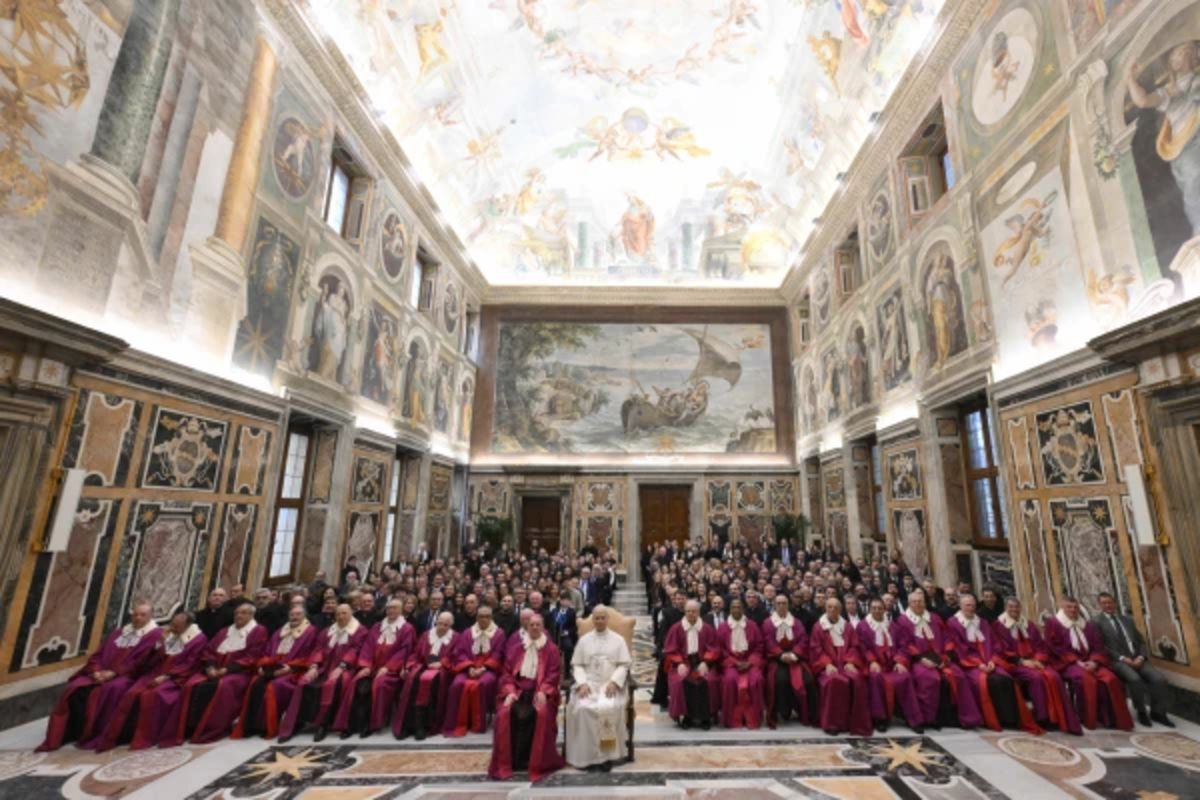
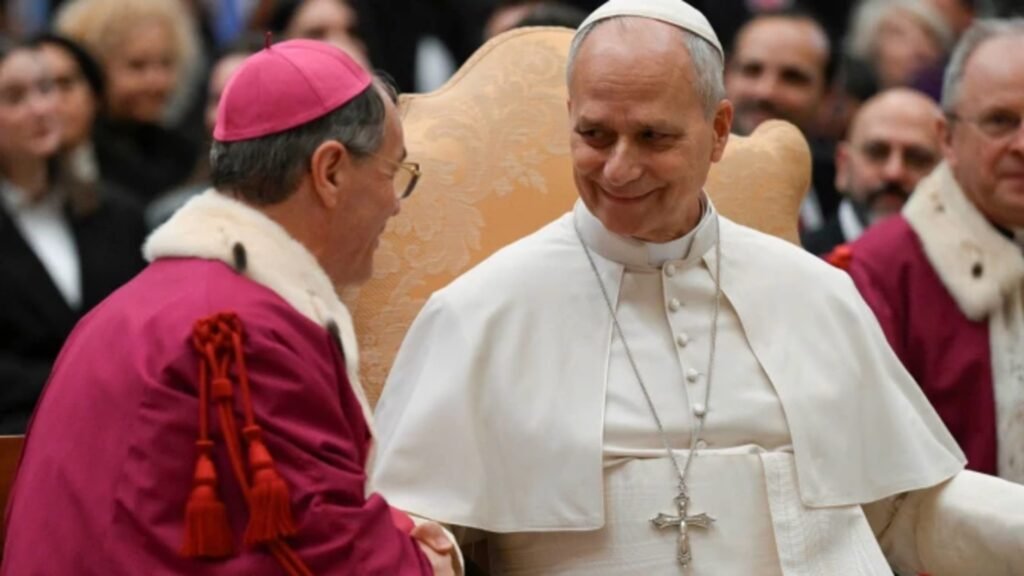
Pope Leo XIV meets with the prelates of the Roman Rota during an audience at the Apostolic Palace in the Vatican on Jan. 26, 2026. | Credit: Vatican Media
A contribution to the salvation of souls
He emphasized that their work must be driven by a “true love for neighbor” and that their service to truth and justice “is a loving contribution to the salvation of souls.”
The Holy Father urged the prelates to exercise “rigorous intellectual honesty,” to strive for “technical competence and an upright conscience,” while also stressing that “service to the truth in charity must shine out in all the work of the ecclesial tribunals.”
“This must be appreciated,” he added, “by the whole ecclesial community and especially by the faithful involved: those who seek a judgment on their marriage, those accused of committing a canonical crime, those who consider themselves victims of grave injustice, and those who claim a right.”
He noted that “canonical processes must inspire the trust that comes from professional seriousness, intense and thoughtful work, and a convinced dedication to what can and must be perceived as a true professional vocation.”
The Holy Father said the faithful “have a right to the proper and timely exercise of procedural functions, because it is a journey that affects consciences and lives.”
He warned: “A purely bureaucratic approach in such an important role would clearly prejudice the search for truth.”
He noted that the judge becomes “a peacemaker who contributes to consolidating the unity of the Church in Christ” and that the judicial process “is the indispensable tool for discerning the truth and the justice in the case.”
“Failure to observe these basic principles of justice — and favoring unjustified disparity in the treatment of similar situations — is a significant violation of the legal profile of ecclesial communion,” he warned.
He noted that in marriage annulment proceedings, even the shortest ones, the grounds for annulment must be carefully evaluated and the process itself must determine whether a more comprehensive procedure is needed.
The pope emphasized that it is essential to study and apply canon law “with rigor and fidelity to the magisterium,” since this allows for resolving cases in accordance with the principles of natural law as well.
At the end of his address, the Holy Father reminded the judges that they are called to “to guard the truth with rigor but without rigidity” and to exercise charity “without omission.”
“In this balance, which is in reality a deep unity, one must manifest true Christian juridical wisdom,” he said.
This story was first published by ACI Prensa, the Spanish-language sister service of EWTN News. It has been translated and adapted by EWTN News English.