For the first time in over twelve centuries, the relic of the Most Precious Blood of Christ has left Mantua. Traditionally guarded in the Basilica of Sant’Andrea, the relic was brought to Rome to the Shrine of San Salvatore in Lauro, thanks to an initiative led by its rector, Monsignor Pietro Bongiovanni.
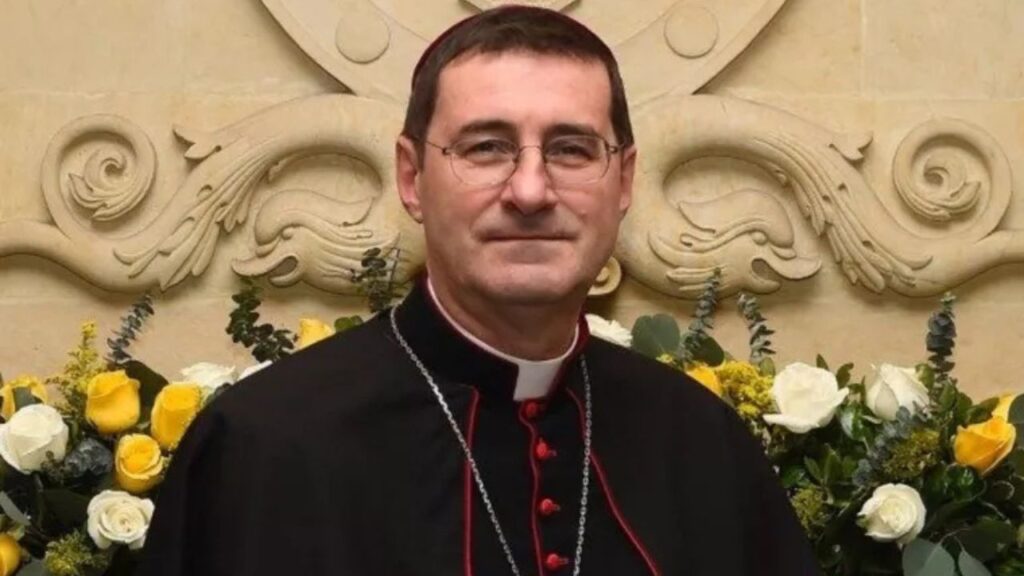
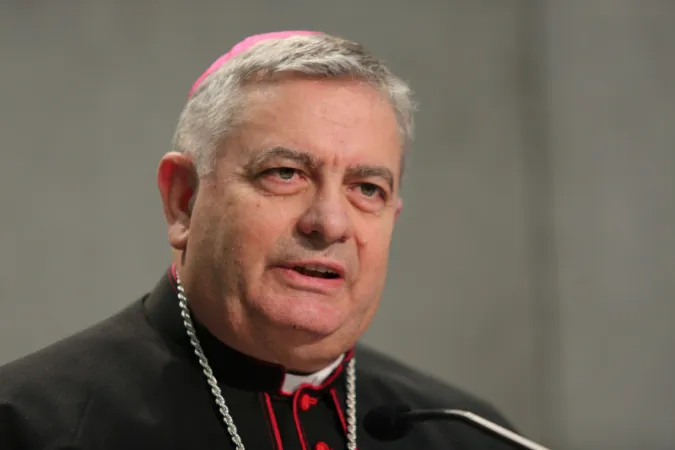
Fr. Pietro Bongiovanni, parish priest of San Salvatore in Lauro, explained the significance of the visit, and what conditions led to it. “The occasion of the Jubilee provided, so to speak, a favorable opportunity. It is the first time that the Most Precious Blood has left the territory of the Diocese of Mantua, and therefore it is an extremely exceptional event.”
The tradition of the relic begins in St. Peter’s Basilica, where the Roman soldier Longinus pierced Jesus’ side with a spear, causing blood and water to flow out. Witnessing this, Longinus converted and collected the soil soaked with Christ’s blood. After his death, Christians buried his body along with the chest of blood-soaked soil to protect it from theft.
Fr. Bongiovanni outlined the historical journey of the relic. “Centuries later, around the fourth century, the first church in Mantua was built over Longinus’ burial site, called San Lorenzo.” The Bishop of Mantua realized this, and begun excavating the Church of San Lorenzo to see what was beneath the altar. There, “they found the body of Longinus and the chest with the relic of the Most Precious Blood. From that point on begins the documented history of this relic, that is, from the year 800.”
Relics bring the faith closer to the faithful, but the relic of Christ’s blood carries a particularly special meaning.
Fr. Bongiovanni emphasized that “it is a sign of mercy, because that blood reminds us of the great heart of God for humanity, a heart that is always ready for forgiveness, for welcoming, for a deep embrace, for mercy. In one word, and this is the great meaning: to kneel before the relic. But above all, because the true center of all this is the Eucharistic mystery. Let us never forget that on the altar, when Mass is celebrated, the sacrifice of Calvary is renewed.”
During the 10 days the relic remained in Rome, the San Salvatore in Lauro sanctuary witnessed large numbers of the faithful coming together in prayer.
Fr. Bongiovanni described the devotion of the attendees. “They take part with deep emotion, they kneel, they pray, they go to confession, and so it has been a truly extraordinary moment of faith that leaves us with a profound impression and also a deep inner motivation. Jesus went to the cross, shedding His blood for our redemption. It is one of the central mysteries of our faith. So to venerate the Blood of Christ means to venerate Jesus in the mystery of salvation — in the mystery of the redemption carried out for us sinful human beings.”
After the relic returned to Mantua, it left a lasting reminder of Jesus’ sacrifice on the cross and the centrality of mercy, forgiveness, and the Eucharist in the Christian faith.
The historic visit to Rome not only allowed believers to venerate this extraordinary relic but also highlighted the enduring connection between Mantua and the heart of the Catholic Church.
Adapted by Jacob Stein. Produced by Alexey Gotovskiy.