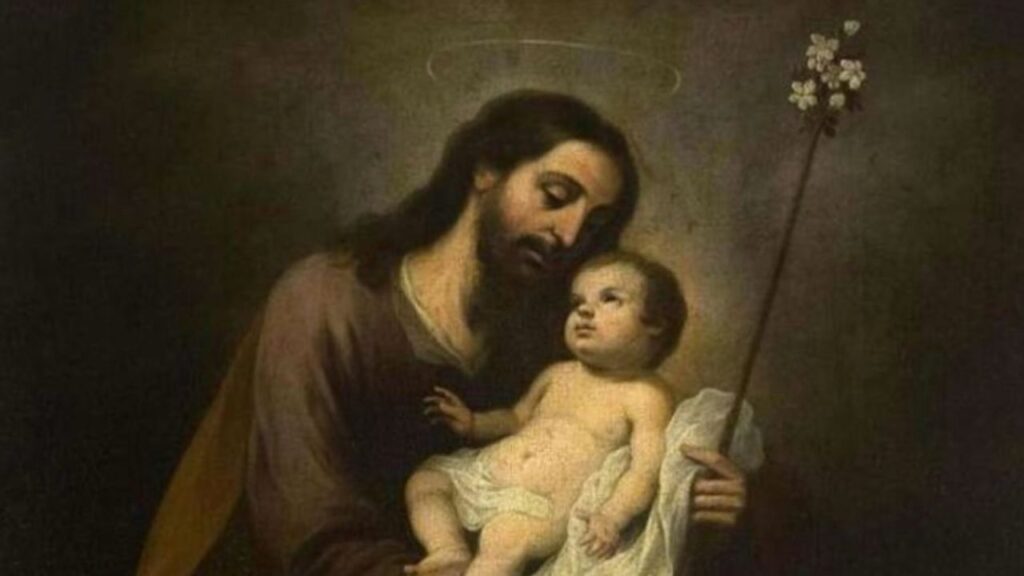
St. Joseph, the beloved spouse of the Blessed Virgin Mary and earthly father of Jesus, is celebrated twice by the Catholic Church every year — March 19 and May 1.
St. Joseph, the beloved spouse of the Blessed Virgin Mary and earthly father of Jesus, is celebrated twice by the Catholic Church every year — first on March 19 for the feast of St. Joseph, Husband of Mary, and again on May 1 for the feast of St. Joseph the Worker.
While the saint’s March feast dates back to the 10th century, his May feast wasn’t instituted until 1955. What was behind it?
May Day
Pope Pius XII instituted the feast of St. Joseph the Worker on May 1, 1955, so that it would coincide with International Workers Day, also known as May Day — a secular celebration of labor and workers’ rights.
During this time, the Soviet Union proclaimed itself as “the defender of workers” and utilized May Day as an opportunity to exalt communism and parade its military prowess. Pope Pius XII chose the date specifically to ensure that workers did not lose the Christian understanding of work.
In his address to the Catholic Association of Italian Workers on that day in 1955, Pius XII said: “There could not be a better protector to help you penetrate the spirit of the Gospel into your life … From the heart of the Man-God, savior of the world, this spirit flows into you and into all men; but it is certain that no worker has ever been as perfectly and deeply penetrated by it as the putative father of Jesus, who lived with him in the closest intimacy and commonality of family and work.”
He added: “So, if you want to be close to Christ, we also today repeat to you ‘Ite ad Ioseph’ — Go to Joseph!”
The Catholic Church has long placed an importance on the dignity of human work. By working, we fulfill the commands found in the Book of Genesis to care for the earth and be productive in our labors.
In his encyclical Laborem Exercens, Pope John Paul II wrote that “the Church considers it her task always to call attention to the dignity and rights of those who work, to condemn situations in which that dignity and those rights are violated, and to help to guide [social] changes so as to ensure authentic progress by man and society.”
St. Joseph is considered a role model of this as he worked tirelessly to protect and provide for his family as he strove to listen to and obey God.
Even before the institution of this feast, many popes were beginning to spread a devotion to St. Joseph the Worker. One of these was Pope Leo XIII, who wrote on the subject in his encyclical Quamquam Pluries in 1889.
He wrote: “Joseph became the guardian, the administrator, and the legal defender of the divine house whose chief he was. And during the whole course of his life he fulfilled those charges and those duties. He set himself to protect with a mighty love and a daily solicitude his spouse and the Divine Infant; regularly by his work he earned what was necessary for the one and the other for nourishment and clothing; he guarded from death the Child threatened by a monarch’s jealousy, and found for him a refuge; in the miseries of the journey and in the bitternesses of exile he was ever the companion, the assistance, and the upholder of the Virgin and of Jesus.”
In addition to being the patron of the universal Church and workers in general, St. Joseph is also the patron saint of several professions including craftsmen, carpenters, accountants, attorneys, bursars, cabinetmakers, cemetery workers, civil engineers, confectioners, educators, furniture makers, wheelwrights, and lawyers.
This EWTN News story was first published on May 1, 2024, and has been updated.