When Cardinal Jorge Mario Bergoglio stepped onto the balcony of St. Peter’s Basilica in 2013, he introduced himself to the world not only as a new Pope, but under a new name. By choosing “Francis,” he offered an early and unmistakable clue to the spiritual compass of his pontificate—a compass pointing toward poverty, peace, creation, and dialogue.
Why the Name Francis Mattered
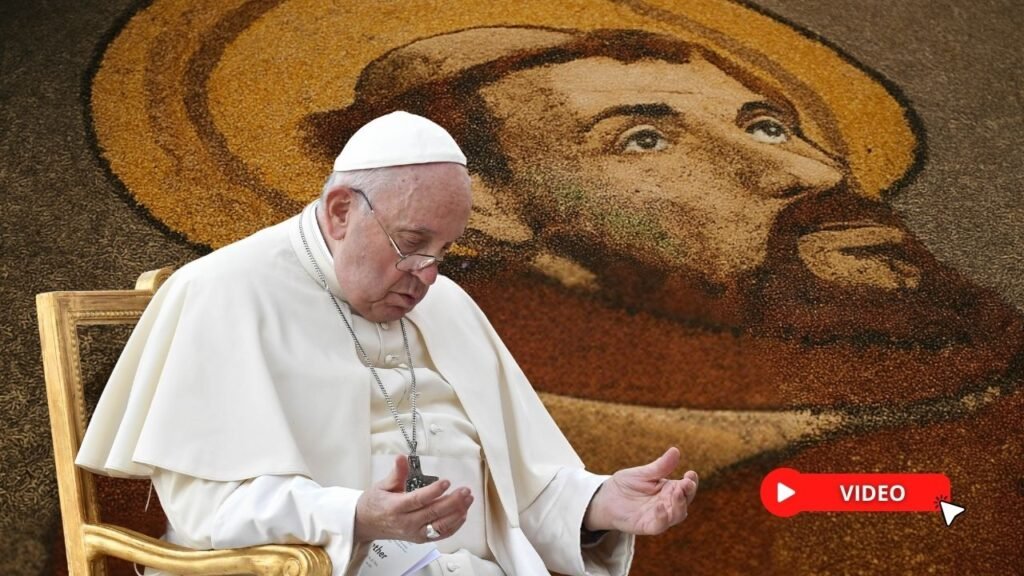
From the very beginning, Pope Francis made clear that his chosen name was not incidental. It was not inspired by Francis Xavier, the great missionary, but by Francis of Assisi, the saint of poverty, peace, and care for creation. Pope Francis himself would later explain the heart of that choice, saying simply, “For me, he is the man of poverty, the man of peace, the man who loves and protects creation.”
For Cardinal Sean O’Malley of Boston, a member of Pope Francis’ Council of Cardinals, the significance of the name was immediately evident. He recalls that “the name for Francis was very very significant and he made it very clear from the beginning that it wasn’t Francis Xavier it was Francis of Assisi and for we Franciscans, we were delighted.” That choice, O’Malley explains, was not symbolic alone. “Many things are Franciscan about Pope Francis,” he says, pointing to “his love for a simple lifestyle, for living that Evangelical poverty that indicates how we depend upon God for everything and our great trust in God’s Providence.” That same Franciscan spirit, he adds, drives “his desire to be connected to the little people, to people who are suffering, to the immigrants, the hungry, the homeless, and to try to show the merciful face of the Father.”
Rebuilding the Church
The influence of St. Francis can be traced throughout Pope Francis’ pontificate. As EWTN contributor Alan Holdren notes, St. Francis of Assisi famously heard God’s call to rebuild the Church. Pope Francis, though in a vastly different role, felt a similar summons and set about his own form of Church reform.
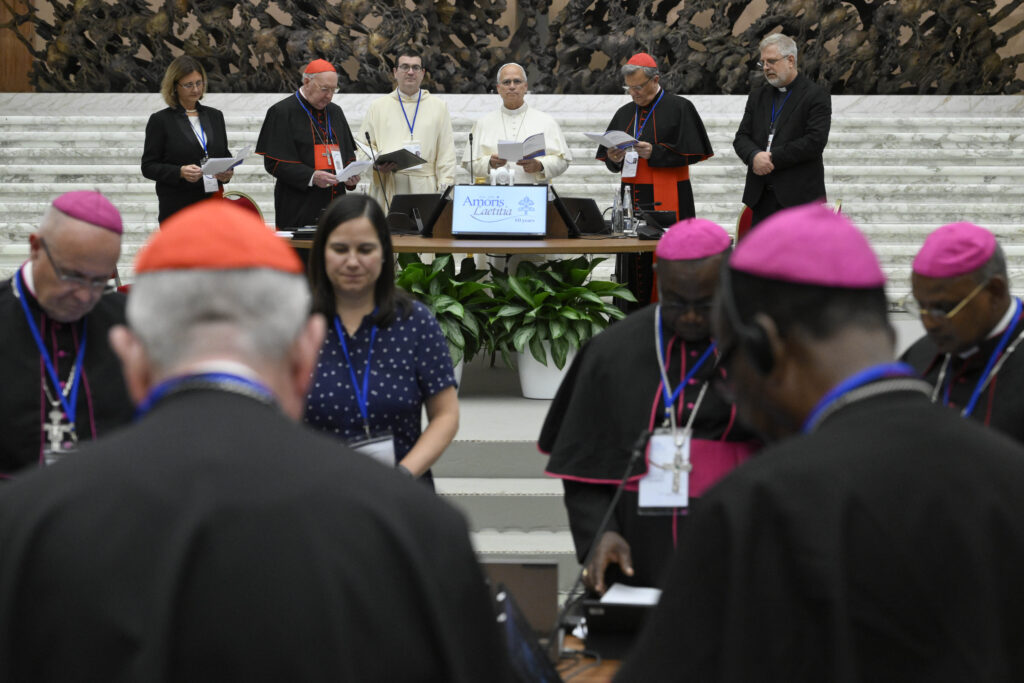
That reform took concrete shape through a renewed emphasis on synodality in decision-making and through the completion of a new apostolic constitution to guide the work of the Vatican. Cardinal O’Malley, one of the nine cardinals chosen from around the world to advise the Pope through the so-called C9 Council, sees this as a deeply Franciscan response. He explains that “the Holy Father has responded to a call to rebuild the church as Francis did,” noting that “certainly all of his work around safeguarding has been such an important step forward in the Church.”
Speaking from his personal experience, O’Malley adds that “being part of his commission for the protection of minors I see how he has become so personally involved in this mission of healing.” That same commitment extends to governance and resources, reflecting “his desire to assure people that the church wants to be transparent and faithful in the use of our temporal goods and transparency and with the financial resources of the reforms of the whole financial system.”
Care for Creation and Human Fraternity
The Franciscan imprint also shaped Pope Francis’ major teachings. In 2015, he issued the encyclical Laudato si’, its title drawn directly from St. Francis’ Canticle of the Creatures, followed in 2023 by Laudate Deum, an exhortation addressing the climate crisis. In 2020, he gave a further Franciscan mark to his teaching on human fraternity and social friendship by signing Fratelli Tutti—“Brothers All”—in Assisi itself.
These were not abstract gestures. They reflected a broader effort to reshape the daily life of the Church. From small choices—such as selecting a simple vehicle or personally calling people on the phone—to structural reforms, Pope Francis, as Franciscan spokesman Father Enzo Fortunato puts it, “Franciscanized” the Vatican and the Roman Curia.
Making the Poor Feel at Home
Father Fortunato points to concrete examples that embody this shift, inviting people to “think about the barbers for the homeless, let’s think about the showers, the bathrooms, the beds for people who have nowhere to go, who have no destination.” These choices, he explains, marked a turning point. “His choices truly began to make the poor at home in the Church, not in separate facilities.” While for many years the Church had relied on structures such as Caritas centers and institutions for the vulnerable, Fortunato says that Francis did something different. “Instead, Francis, we could say, wanted them with him at home.”
A Franciscan Imprint on the Church
Over the years, Pope Francis returned to Assisi more often than any other place outside Rome. That resemblance between the saint and the Pope has also been noted within Franciscan communities themselves. At the Santa Chiara convent in Rome, Mother Elena Francesca Beccaria reflects on what Francis’ actions have left behind. “Mainly, what I believe this will leave me with is a sense of respect for the other,” she says, understood “in the broadest sense: the Other with a capital ‘O,’ of course, but also the other as my brother, the other as creation itself.” What remains most strongly, she adds, is “this attentiveness, this care for others and for the created world.”
Crossing Frontiers for the Gospel
At the Rome headquarters of the Franciscan Friars Minor, the Order’s minister general, Fra Marco Fusarelli—the 121st successor of St. Francis—also sees a clear continuity. He recalls that “St. Francis was an evangelizer and sent us to preach the gospel,” and that “this anxiety is felt in the pope.” What stands out most, Fusarelli explains, is “this very great universality that stands out in the Petrine service of Pope Francis,” echoing how St. Francis himself crossed frontiers in his time.
That same spirit is visible, Fusarelli says, in “this stubborn search for encounter with the Muslim world that the pope promotes.” Some critics, even within the Church, call this approach naïve, asking whether genuine dialogue is possible. But Fusarelli believes otherwise, noting that “the pope sees further, he understands the value of signs.”
Dialogue, Peace, and Courage
During his pontificate, Pope Francis visited more than a dozen Muslim-majority nations, consistently promoting what he calls human fraternity and peaceful coexistence. He forged a close relationship with the Grand Imam of Al-Azhar, echoing the journey St. Francis himself made centuries earlier to meet a Muslim sultan in Egypt.
That courage, according to Sheikh Omar Abboud, a longtime Muslim friend of Francis from Buenos Aires, places the Pope firmly within the Franciscan tradition. Abboud explains that “it gives St. Francis a particular kind of courage in history,” and that “that same courage is also the courage that Pope Francis has today.” This courage, he says, is not limited to calling for peace or rejecting war. “We are at the gates of perhaps one of the most important voices in reference to the geopolitical vision that exists in the modern world, the third world war in pieces.” Francis’ warning, Abboud insists, “is not a slogan, it is a reality.”
In such a context, Abboud explains, “to encourage to talk, to approach, to exchange, is not the whole solution to the conflict, but it is surely a part of the solution.”
A Thread Running Through a Pontificate
Messenger of peace, advocate for the poor, reformer, and bridge-builder—the connections between the 13th-century saint and the 21st-century Pope are many. Looking back, what began with the simple choice of a name can now be seen as the unifying thread of Pope Francis’ pontificate: a life and mission shaped by the enduring legacy of St. Francis of Assisi.