From war zones to refugee camps, Trinitarians provide food, shelter, and spiritual support to persecuted Christians around the world.
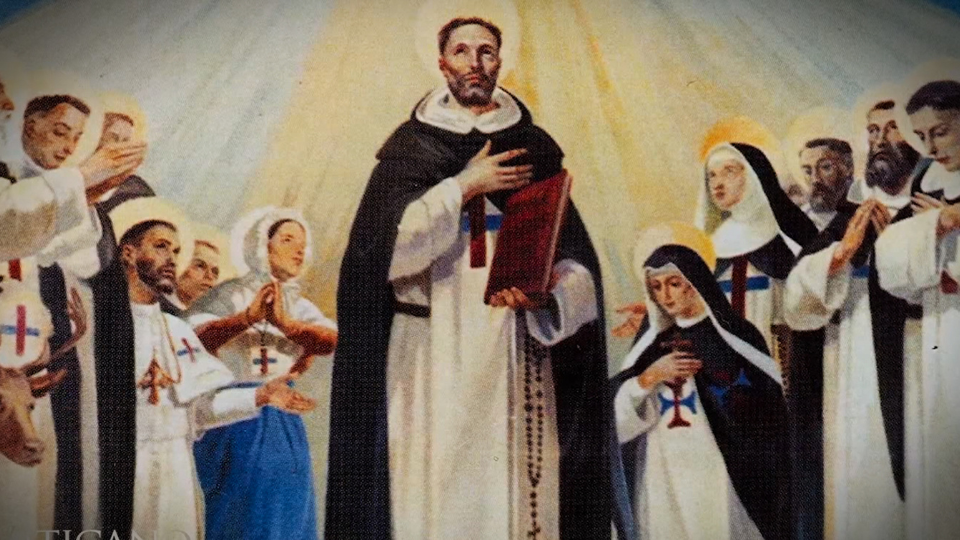
The Trinitarian Order began in the Middle Ages during the Crusades with a radical mission: to ransom Christian captives. They didn’t just negotiate — they offered themselves in exchange, stepping into dungeons so others could walk free.
They were the first religious order in Church history to leave the monastery — not to preach, but to redeem.
More than eight centuries later, they still do.
Fr. Antonio Aurelio Fernández Serrano, President of the Trinitarian Secretariat of the Family and SIT General, explains, “The foundation was officially approved in 1198, when we received a letter from Pope Innocent III endorsing our own Rule. Our Order was born during the time of the Fourth Crusade. The founder established a community whose mission went beyond the walls of the monastery—he left his own home to rescue and redeem Christians held in Muslim prisons. In turn, Muslims who were being held in parts of Europe, especially in the south, were also exchanged.”
From this mission emerged a new concept of religious life within the Church: a life not confined to the monastery, but one that reaches outward—toward others, especially those in greatest need.
Fr. Antonio shares that their story is not a history lesson — it is a living charism:
“Even today, there are still so many people in prison because of their faith. And then there are others who may not be behind bars, but are still suffering persecution for the same reason — their belief in Christ. That’s why an organization was created called Trinitarian International Solidarity. Its mission is specifically to support persecuted Christians and to defend religious freedom.”
In 1999, that mission — once carried out in ransom negotiations found a new form in Trinitarian International Solidarity, or SIT. Its purpose: to respond to today’s captivity with today’s tools — legal advocacy, humanitarian aid, and a promise never to abandon those who suffer for Christ’s name. Father notes:
“There are people who are dying in extreme poverty — elderly people, especially. So, we saw a very urgent need to create centers where they can come together and spend their final years with dignity.”
He adds, “These are extremely, extremely serious situations. In Nigeria, we all know about the girls kidnapped by Boko Haram — it made headlines. But after a few months, people just forget about it. Since then, the Trinitarians have been there continuously, year after year — rescuing them, freeing them, supporting them, and finding centers to shelter them.”
Also, “It’s important to note that India has risen on the scale of religious persecution. Just last year, it entered the category of extreme persecution. In fact, two or three years ago, the president of India himself said that anyone who is not Hindu is not truly a citizen of India.”
Whether in Syria, Nigeria, or northeast India, Trinitarians stand beside the invisible victims — bringing hope, medicine, food, and above all, presence.
Through discreet, respectful documentation, Trinitarians collect footage from communities under attack — often too raw for mainstream media. These testimonies are shared in their website to make the unseen suffering visible. Father explains:
“We share these videos, which are very dramatic — you can clearly see women being assaulted, beaten, even shot. These are videos that many mainstream media outlets refuse to show, so we publish them directly on our own website so people can see the reality for themselves.”
This visual archive became the foundation of their recent documentary, marking 25 years of the Trinitarian International Solidarity. Rather than showcasing their own work, the film amplifies the voices of those who endure persecution for their faith — voices that remind the world why they suffer. Father further notes:
“It’s the Christian message that frightens them. Christianity is the only religion, both philosophically and theologically, that truly seeks out the person — the individual. It focuses on the human person, and therefore on that person’s wholeness, their dignity. And at the heart of the Christian life is one essential foundation: freedom.”
SIGN UP FOR OUR NEWSLETTER HERE
Adapted by Jacob Stein
Almudena Martinez contributed to this story. Produced by Alexey Gotovskiy, Camera by Alberto Basile, Special thanks and Credits to The Order of the Most Holy Trinity and of the Captives.