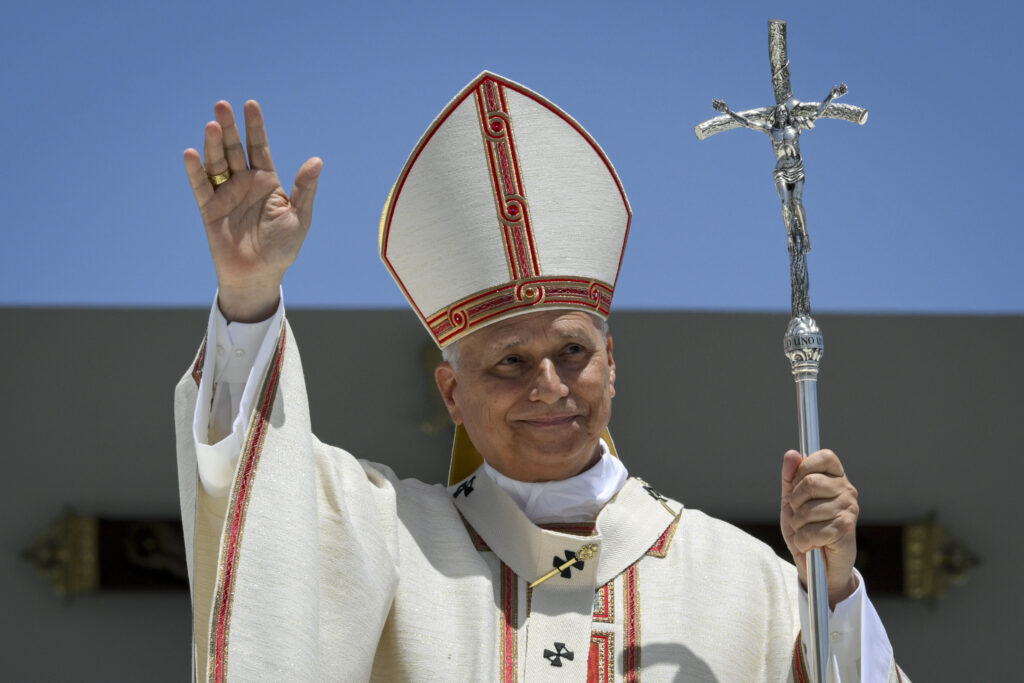
The annual collection to support the popeʼs charitable activities takes place June 28, and donations can be made now online.
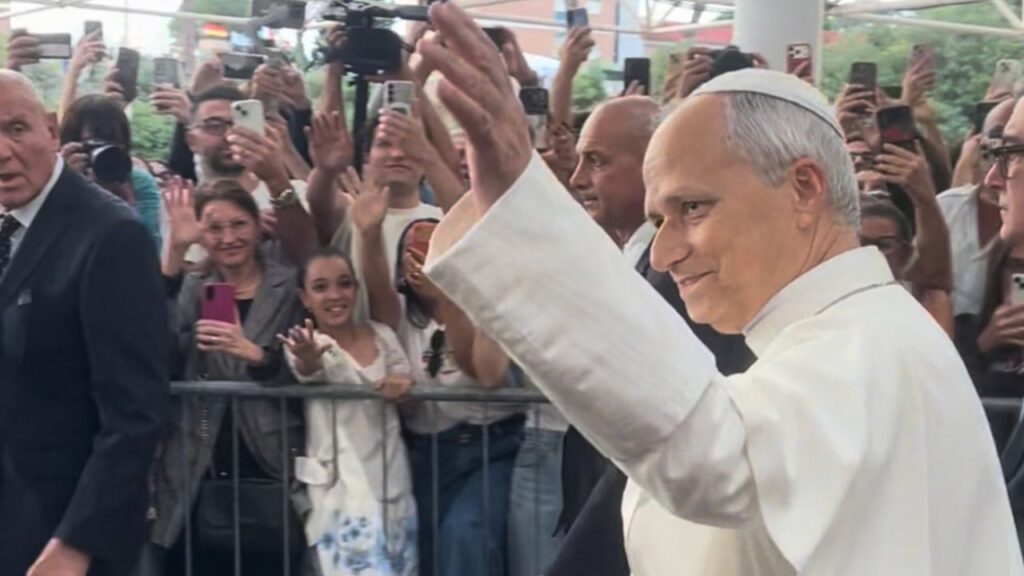
As Pope Leo XIV carries out his global mission, the Vatican is calling on the faithful worldwide to support him through the traditional Peter’s Pence collection this Sunday, June 28, the day before the solemnity of Sts. Peter and Paul.
No contribution is too small; every gift counts: It doesn’t matter whether you can offer a grain of sand or a mountain; what truly matters is participating and giving what is within your means, according to Peter’s Pence Office.
To support this initiative, the Vatican Secretariat for the Economy and the Dicastery for Communication have prepared a series of informational and multimedia materials.
What is Peterʼs Pence?
The Peterʼs Pence website explains that it is an offering “which may be small in amount, but holds great symbolic value,” as it “demonstrates a sense of belonging to the Church and of love and trust in the Holy Father.”
It is also “a concrete sign of communion with him as the successor of Peter, and of concern for the most needy, whom the pope always cares for.”
Peter’s Pence has two purposes. The first is “to support the mission of the Holy Father, which extends to the entire world through the proclamation of the Gospel, the promotion of integral human development, education, peace, and fraternity among peoples.”
A second purpose is “to support numerous charitable works benefiting individuals, families in difficulty, and populations affected by natural disasters and wars, or those in need of assistance or development aid.”
How did Peterʼs Pence originate?
Peterʼs Pence, as a donation to the pope, began to take place on a regular basis in the 7th century with the conversion of the Anglo-Saxons. Over time, more European peoples joined the practice. In the Middle Ages, the term was used to designate the annual contribution made by states to the Holy See, a custom that eventually fell out of use.
In modern times, specifically around 1870, following the end of the Papal States, the practice of making material contributions to the Vatican picked up again across Europe. The pope was able to provide aid to the needy, such as those affected by an earthquake in Croatia in 1881.
How is the money used now?
The website presents reports on the use of the funds raised. In 2024, for example, donations totaled 58.5 million euros ($66.5 million) of which 13.3 million euros ($15.1 million) were used to help those most in need, funding 239 charitable projects across 66 countries.
The remaining funds — the majority of the collection — supported the broader apostolic mission of the Holy Father and the Holy See. Specifically, 61.2 million euros helped cover essential activities carried out by Vatican dicasteries and offices, including evangelization efforts, support for local churches in difficulty, formation of priests and seminarians, diplomatic work through apostolic nunciatures, education, and the promotion of integral human development and peace.
This story was first published by ACI Prensa, the Spanish-language sister service of EWTN News. It has been translated and adapted by EWTN News English.