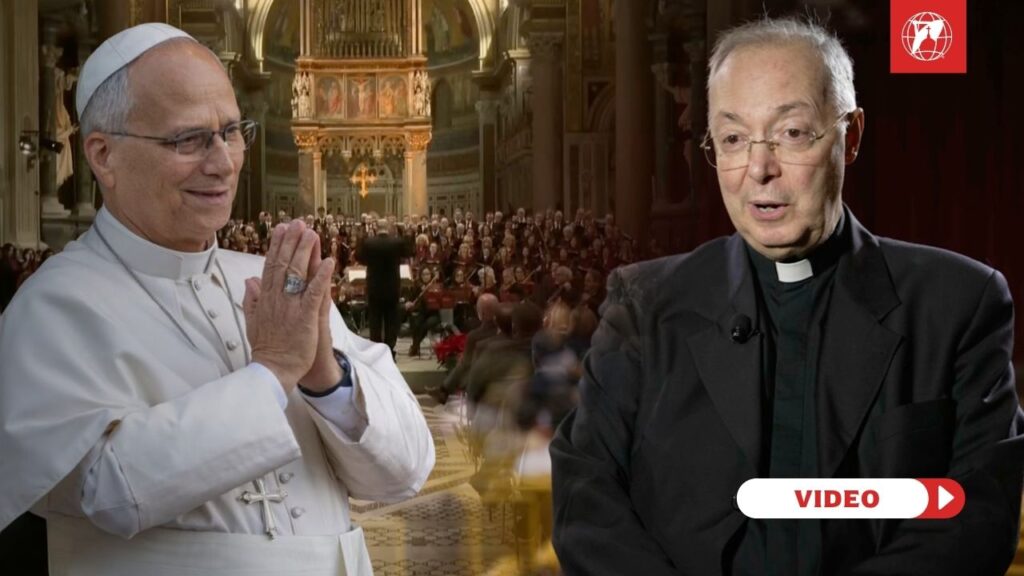
For more than 40 years, the Choir of the Diocese of Rome has helped give voice to the Church’s prayer, serving the Pope and the Diocese of Rome through music and liturgy.
Founded in 1984 at the encouragement of Pope Saint John Paul II, the choir was established to animate diocesan liturgies. Its founder and director, Monsignor Marco Frisina, recalls that the idea emerged from a simple observation: the Diocese of Rome did not yet have a choir of its own.
“I had been a priest for only two years, but I had already been involved in important liturgies with the Holy Father,” Frisina said. “At the time, however, there was no diocesan choir, that is, no choir representing the Diocese.”
Frisina, who was then serving as a formator at the Roman Major Seminary, proposed inviting young people who attended prayer meetings there to form a choir. Cardinal Ugo Poletti, then the Cardinal Vicar of Rome, welcomed the idea.
What began as a group of young volunteers has grown into a choir that has participated in some of the Church’s most significant celebrations, including World Youth Days, canonization Masses and major events at the Vatican.
The choir is also known for its annual Christmas Concert at the Archbasilica of St. John Lateran, which is open to the public. Beyond Rome, its performances have taken it to countries including France, Germany, Austria, Spain, Turkey and the United States.
A choir rooted in parish life
Despite its prominent role in papal and diocesan liturgies, the choir remains rooted in ordinary parish life. Its members are volunteers rather than professional musicians, coming from different backgrounds and stages of life.
“The people who come here are not professional musicians. They come from their parishes. They are students, workers, fathers and mothers of families,” Frisina explained. Members range in age from 18 to 70 and beyond, with many growing up within the choir over the years.
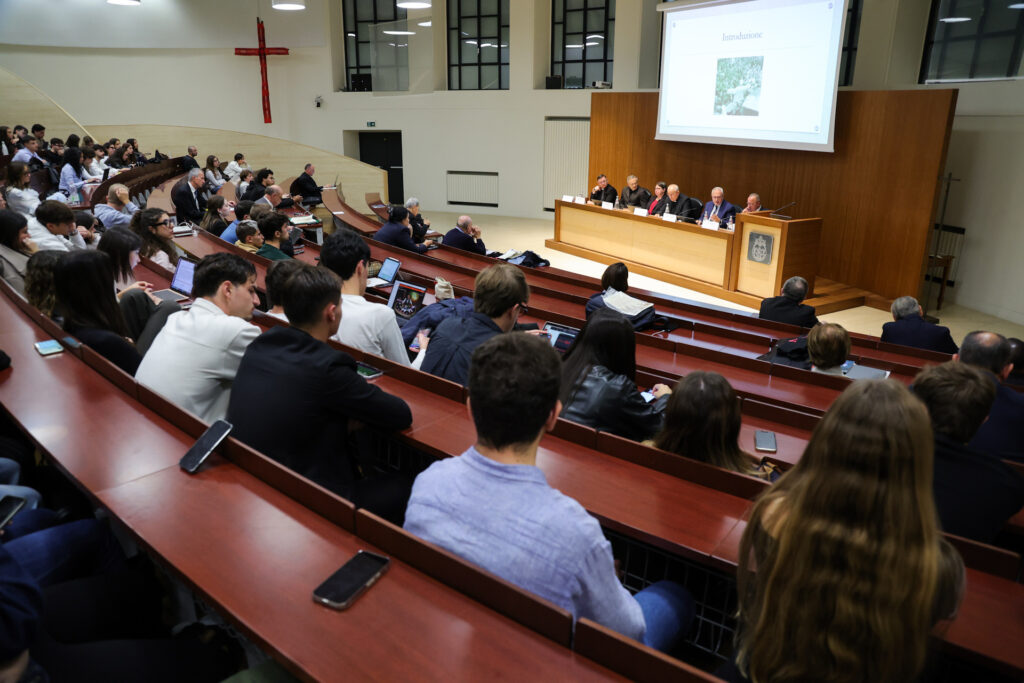
Every Tuesday evening, the singers gather in the theater of the Pontifical Roman Major Seminary to rehearse familiar compositions, learn new pieces and prepare for upcoming liturgical celebrations.
Prospective members undergo an audition, but Frisina emphasizes that the process is intended to establish whether candidates have the basic skills needed to participate, rather than to select professional-level performers.
“After that, they learn along the way,” he said.
Music as a path of faith and evangelization
For Frisina, the choir’s mission extends well beyond musical training. Through years of rehearsals and performances, he has sought to offer its members spiritual and pastoral formation alongside their musical development.
The choir also serves communities throughout the Diocese of Rome, participating in parish celebrations and other important moments in the lives of local churches. Its evangelization mission includes performances of Frisina’s oratorios in parishes across the city.
The choir’s impact is evident in the experience of its members. Oriana Oliverio, a longtime member and section leader, describes singing as a source of spiritual grounding.
“In every event and every moment shared with others, we rediscover the experience of prayer, which is the choir’s primary and fundamental purpose, the very reason that brings us together here,” she said. “In my personal experience, singing has kept me anchored in the faith.”
Frisina is also widely known for composing hundreds of liturgical and religious works, including Anima Christi and the popular hymn Jesus Christ, You Are My Life, which has become closely associated with international Catholic gatherings.
Memories at the heart of the Church
Over the decades, the choir has accumulated memories of some of the most important moments in the life of the Church. Emanuele Faiola, its vice director, recalls the joy of participating in World Youth Days with Pope Saint John Paul II.
Among the most memorable experiences, he said, was the canonization of John Paul II, the Pope who had encouraged the choir’s creation. Other milestones include the Concert for the Poor and the International Choir Meeting at the Vatican.
For the choristers, singing at papal liturgies remains a particular privilege. Frisina regularly reminds them not to become accustomed to the experience or take it for granted.
“It is a great privilege to be at the heart of the Church, close to the Pope, who in those moments speaks on behalf of everyone,” he said. “And we give voice to the Church’s prayer.”
Four decades after its founding, the Choir of the Diocese of Rome continues to unite music, community and evangelization, showing how the voices of ordinary faithful can serve the universal Church through the beauty of sacred music.
Adapted by Jacob Stein. Producer: Bénédicte Cedergren; Camera by Fabio Gonella, Ludovico D’Onofrio; Video Edited by Alessio Di Cintio; Special thanks & Credits to The Choir of the Diocese of Rome.