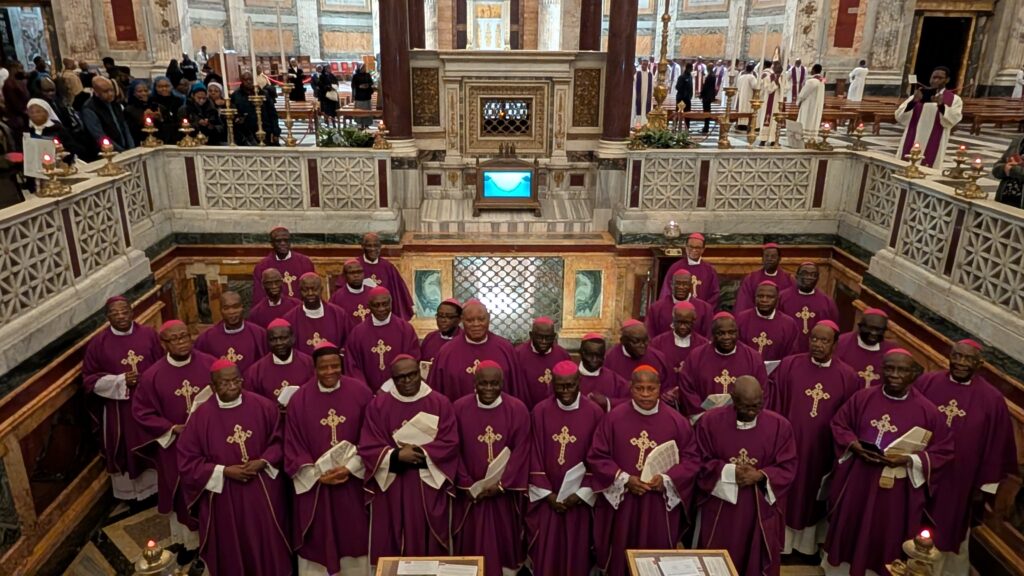
Study Group 7 says bishops’ visits to Rome should be instruments of missionary conversion, communal discernment, and greater co-responsibility in the Church.
VATICAN CITY — For centuries, “ad limina apostolorum” visits — the periodic pilgrimage of diocesan bishops to the tombs of the apostles Peter and Paul and their meetings with the successor of St. Peter — have often been perceived primarily through an administrative or canonical lens.
In response to the 2021–2024 synodal process, however, Study Group 7 of the Synod of Bishops has proposed a significant structural and spiritual renewal of the visits from what it describes as a “missionary synodal perspective.”
The study group is examining “Some Aspects of the Person and Ministry of the Bishop,” including criteria for selecting candidates for the episcopate, the judicial function of bishops, and the nature and course of ad limina visits.
A call for missionary synodality
Rooted in Pope Francis’ apostolic constitution Praedicate Evangelium and the final document of the XVI Ordinary General Assembly of the Synod of Bishops, the study group argues that the ad limina visit should go beyond routine administrative reporting.
As the synod’s final document states: “The visits ad limina Apostolorum are the apex of the relation between the Bishops of local Churches and the Bishop of Rome and his closest collaborators in the Roman Curia. Many Bishops desire that the way these visits are conducted will be reviewed to make them more and more an opportunity for open exchange and mutual listening” (No. 135).
Study Group 7 says the central purpose of revising the process is to ensure that “the ad limina visit should not concern itself primarily with matters relating to the internal administration of the particular Church, matters that can be addressed just as effectively through the ordinary contacts with the Curia.”
Instead, the group says, the visits should, “in keeping with the biblical witness, support the mission that the Christian community is called to carry out in the world in which it lives, becoming an instrument at the service of the missionary conversion of ordinary pastoral ministry.”
Theological grounding: The Church as the people of God and a communion of Churches
To explain the proposed renewal, Study Group 7 grounds its framework in the ecclesiology of the Second Vatican Council, particularly Lumen Gentium and Ad Gentes.
The ad limina visit historically developed within a theological understanding of the Church as a “communion of Churches,” as described in Lumen Gentium 23. The relationship is based on reciprocal exchange between the particular Churches and the See of Rome.
The visit provides an opportunity for local pastors to give an account of the Church’s mission and to share how the Gospel is proclaimed in different cultural contexts, while ensuring that these local expressions find their proper place within “Catholic unity,” as described in Lumen Gentium and Ad Gentes.
At the same time, the visit serves the Petrine ministry by giving the bishop of Rome an opportunity to encourage his brother bishops while exercising Peter’s unique primatial service.
As Vatican II teaches, the Chair of Peter “presides over the whole assembly of charity” and “protects legitimate differences, while at the same time assuring that such differences do not hinder unity but rather contribute toward it” (Lumen Gentium, 13).
Scripturally, the study group compares this dynamic to St. Paul’s journeys to Jerusalem to meet Peter and the apostles, as recounted in Acts and Galatians, where the central concern was maintaining unity in faith while fostering missionary expansion among the nations.
Praedicate Evangelium, meanwhile, says structures such as episcopal conferences express a “Communio Episcoporum … in service to the Communio Ecclesiae grounded in the Communio Fidelium.”
Preparation in the particular Church: Convoking the people of God
One of the most significant elements of Study Group 7’s proposal is the re-centering of the ad limina process within the entire people of God.
Rather than being an exercise restricted to the bishop and a small number of diocesan officials, preparation for the visit would begin in the local Church through a process of shared ecclesial discernment.
Study Group 7 states that before bishops travel to Rome, “it will be necessary for the Bishop to convoke the People of God so that they may engage co-responsibly in the preparation of the Preliminary Report through a process of ecclesial discernment, nourished by prayer and participation, in a manner corresponding to the various charisms, missions, and ministries.”
That communal preparation would make use of existing participatory structures and involve “Priests, Deacons, Consecrated Men and Women, and Lay faithful, particularly within the various diocesan bodies, beginning with the Presbyteral Council and the Diocesan Pastoral Council.”
By grounding the “Relatio Praevia,” or Preliminary Report, in periodic local processes of evaluation and accountability, the group says moments such as the ad limina visit “must be understood and lived as events that involve, insofar as possible, all the members of the People of God.”
The goal, it adds, is that “the People of God living within each local Church will come to perceive the ad limina visit as an event that directly concerns them.”
Roman dialogue and returning home
In Rome, the focus would shift toward spiritual revitalization and collegial dialogue.
Rather than concentrating on formal briefings, Study Group 7 envisions an “exchange of gifts.”
“The dialogue, understood as an ‘exchange of gifts’ and conducted in a collegial style, should be frank, cordial, and reciprocal rather than one-directional,” the group states. “It should be capable of bringing to light both the strengths and the needs of the local Churches, while fostering the sharing of good practices.”
To give greater expression to the participation of the people of God, the study group also says “it is desirable that a diocesan delegation accompany the Bishop during the ad limina visit, in whatever manner may seem most appropriate, giving preference to those who collaborated in its local preparation.”
After returning home, the bishop and other delegates would report back to the local Church through public meetings, allowing diocesan participatory bodies to discern concrete pastoral steps flowing from the visit.
From canonical requirement to missionary instrument
By grounding ad limina visits more firmly in the image of the Church as the people of God, Study Group 7 seeks to turn what can be perceived primarily as an authoritative or bureaucratic requirement into an instrument of missionary synodality.
Under the proposal, the local Church would discern its mission together, send its pastor — potentially accompanied by representatives of the faithful — to meet the successor of St. Peter, and then receive the fruits of that encounter as a renewed impetus for evangelization.
In this vision, the ad limina visit becomes a more visible expression of co-responsibility, Catholic unity, and missionary conversion.
This article was originally published by EWTN News English.