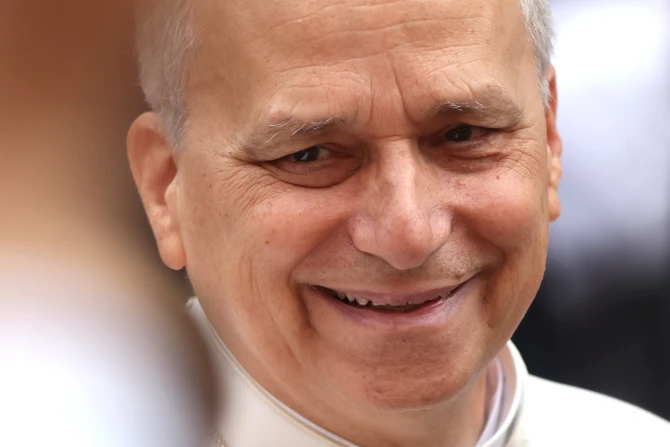
Vatican diplomatic work happens in silence. You may not know his name, but this cardinal has spent most of his career working discreetly.
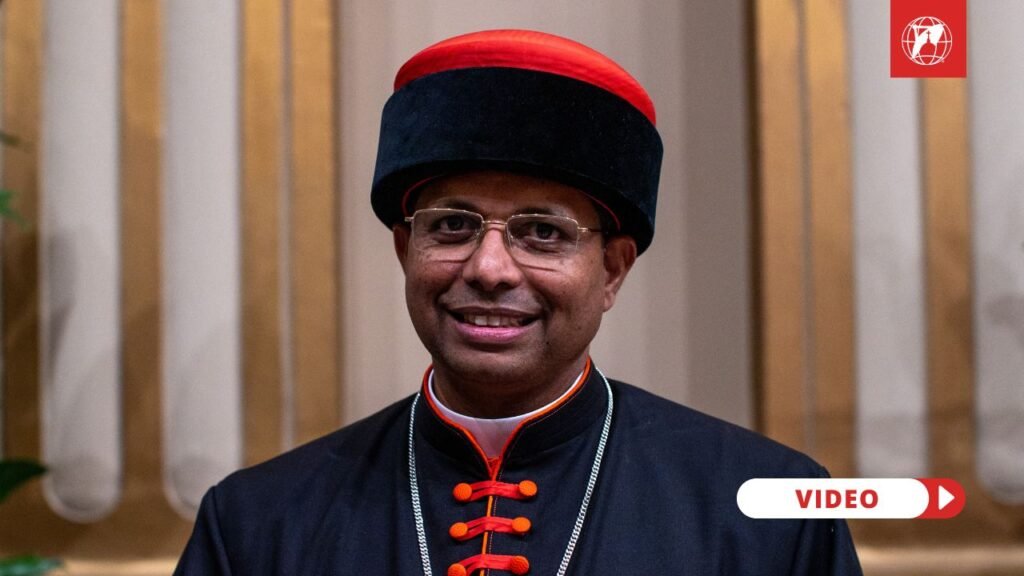
Cardinal George Jacob Koovakad is 52—among the youngest living cardinals. A Holy See diplomat, he served in postings abroad, from Algeria and Iran to Venezuela. Then Pope Francis put him in charge of something even more delicate—the papal journeys office—earning him a reputation as the Pope’s behind-the-scenes “travel agent,” helping organize 12 papal trips across 18 countries, where every trip is part pastoral mission and part high-stakes diplomacy.
Now, Cardinal Koovakad leads the Vatican’s Dicastery for Interreligious Dialogue. In 2025, he represented the Holy See at Kazakhstan’s Congress of Leaders of World and Traditional Religions, where he also met privately with Patriarch Kirill of Moscow— the first high-level encounter in Pope Leo’s pontificate. And just weeks later, he welcomed the congress organizers at the Vatican to deepen that cooperation.
And here’s what most people never saw: during the conclave that elected Pope Leo XIV, Cardinal Koovakad had a crucial duty inside the Sistine Chapel—drawing the names of the cardinals who scrutinize and verify each round of voting.
Now, he speaks with EWTN Vatican Correspondent Paola Arriaza Flynn about the journey that
Cardinal Koovakad, you are Prefect of the Dicastery for Interreligious Dialogue. You were born in Kerala, India, and studied Chemistry. How did you get here? How did you discover your vocation?
From a young age, I was interested in the priesthood thanks to the life of my uncle, who was a priest and also my mother’s uncle. He was a priest; he has since passed away. And the figure of Mother Teresa of Calcutta from India. Although I did not know her personally, her message was very important for me in making the decision to become a priest.
And you helped the Church in different countries around the world as a diplomat. You were in Iran, Costa Rica, Venezuela, South Korea… You also lived in difficult contexts. How did you face these contexts?
Living in a country for three or four years is a very interesting learning experience: getting to know a culture and getting to know a local Church. For that reason, each country was also, for me, a time of receiving formation.
You were in Venezuela in 2019, during strong protests against Maduro. How did you experience that moment, and how did the Church deal with that situation?
For me, living in Venezuela was a great joy. In the midst of the crisis, both the Church and the people sought to share and to live with joy. They are people who, even in difficulty, preserve joy. For me, it was a great message and a great experience.
In 2020, you arrived at the Vatican to work in the Secretariat of State, preparing and organizing Pope Francis’ trips. What was that like?
When the Successor of Peter arrives, something changes: you experience faith up close. With Pope Francis, it impressed me to see how so many people waited for the Holy Father, and how he always sought out the weakest and most in need. He had the face and eyes of a shepherd who goes in search of the most needy sheep. For me, preparing those encounters was a continuation of diplomatic work.
Now you have a new position: you are Prefect of the Dicastery for Interreligious Dialogue. What does this work involve?
As Prefect, I think that, especially for today’s youth, it is essential to convey this need to work together for peace and harmony. The most difficult problem is prejudice: without knowing the other, one remains with ideas taken from others or from the media, without a correct understanding of people and communities. Living with prejudice is very dangerous. That is why we must promote respect and work for peace.
We also see a growing global antisemitism and a rhetoric of violence. What can the Dicastery for Interreligious Dialogue do in the face of this reality?
It is very important to distinguish politics from religion, especially when we think about what is happening today in the Middle East. As a Dicastery, helping countries, communities, and also the faithful to take an interest in knowing other religions and their history is essential. We must especially help young people to learn the noble messages of each religion and to work together because we have much to do against poverty and ignorance; and now we also face the challenge of artificial intelligence. Together—people of different religions—we can do a lot of good. That is the path we promote as a Dicastery.
Your Eminence, thank you very much.
Adapted by Jacob Stein. Produced by Alexey Gotovskiy; Camera by Alberto Basile, Fabio Gonnella