ROME — As artificial intelligence transforms classrooms and raises new questions for parents and educators, one of Australia’s largest Catholic school systems is seeking to ensure that technological progress remains centered on the human person.
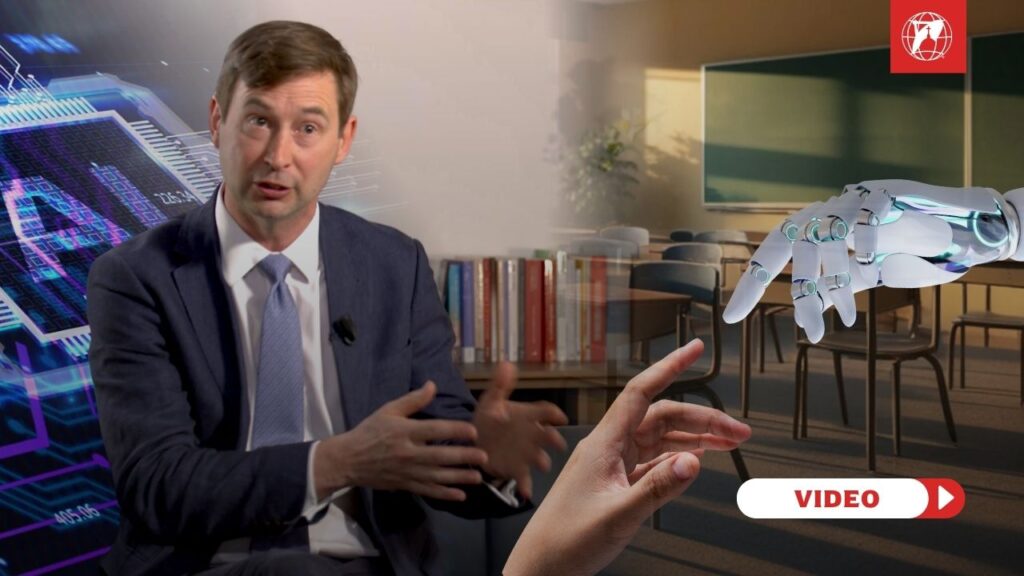
Dr. Edward Simons, Executive Director of Melbourne Archdiocese Catholic Schools, spoke with EWTN Vatican during a visit to Rome about the distinctive mission of Catholic education, the challenges of artificial intelligence and Australia’s preparations for the 2028 International Eucharistic Congress in Sydney.
Watch the Interview Here
Melbourne Archdiocese Catholic Schools encompasses nearly 300 schools educating approximately 120,000 students, supported by almost 20,000 staff. For Simons, the size of the system comes with an opportunity to build upon the heritage of Catholic education while responding to the challenges facing young people today. Pasted text
Forming more than minds
Simons said Catholic education distinguishes itself by understanding formation as something broader than the acquisition of information, skills and academic knowledge.
“Our faith, our Catholic mission, our Catholic identity is at the heart of all that we do,” he said.
Catholic schools, he explained, seek to help students “grow in wisdom, grow in virtue” and understand that their education is not simply for their own benefit but should prepare them to serve others and contribute to the world around them. Pasted text
That vision extends beyond students themselves. Simons emphasized the importance of families, parishes, teachers and local communities in creating a sense of belonging and purpose.
Artificial intelligence enters the classroom
Among the most urgent issues discussed during Simons’ meetings in Rome has been artificial intelligence.
AI is already present in classrooms and staff rooms, he noted, and its capabilities will continue to develop rapidly. Rather than attempting to keep technology out of education, Simons said Catholic schools need to discern how it can be used responsibly.
“With high-tech, we need to be deeply human,” he said.
Technology, he argued, should remain guided by human judgment and discernment, with schools also helping parents make informed decisions about how their children use AI. Pasted text
Melbourne’s Catholic schools are examining governance frameworks, policies and strategies that allow students to benefit from new technologies without allowing technology itself to determine the purpose of education.
Information alone, Simons said, is insufficient. Students also need virtue and wisdom to determine what they should do with the information available to them.
‘The very best resource’ is still the teacher
That approach also means treating students, families and schools as partners in navigating technological change.
Simons said Catholic education should draw on technological expertise while ensuring that its own values remain at the center of decisions in the classroom.
Where technological solutions are available, he said, “faith, hope and love” should surround the way those solutions are used.
“Catholic education has always used technology. It’s always used tools,” Simons said. “But the very best resource in any classroom will be a human, will be a teacher.” Pasted text
Simons said demand for Catholic education in Melbourne is strong, with more parents choosing Catholic schools than at any previous point. He attributed that interest not only to academic quality but also to Catholic education’s commitment to forming the whole person — spiritually, relationally and academically. Pasted text
Head, heart and hands
Asked how Catholic schools can form both the hearts and minds of students, Simons described an approach centered on “head, heart and hands.”
That formation, he said, works best through cooperation among schools, families and parishes.
The broader goal is captured in Melbourne Archdiocese Catholic Schools’ mission of “forming lives to enrich the world,” while also sharing resources and lessons with Catholic educators elsewhere.
Simons connected that mission with Pope Leo XIV’s call to draw “new maps of hope,” describing Catholic education as an international network in which schools can learn from one another while remaining rooted in their own communities. Pasted text
Australia prepares for 2028
The conversation also turned to the 2028 International Eucharistic Congress, which will bring Catholics from around the world to Sydney.
Simons said Australian Catholics are already excited about welcoming pilgrims, particularly young people, while recognizing that traveling to Australia will itself be a significant pilgrimage for many participants.
The gathering will also provide Australia with an opportunity to share the distinctive expression of Catholic faith and spirituality found among its Aboriginal and Indigenous peoples.
At the same time, Simons said Australian Catholics hope to learn how young people live and express their faith across different continents.
“We’re very, very excited to be welcoming thousands and thousands of people from near and far,” he said, describing the Congress as an opportunity to celebrate the faith, strengthen solidarity and renew Catholics’ sense of belonging. Pasted text
For Simons, both the coming Eucharistic Congress and the transformation of education point toward the same fundamental challenge: ensuring that Catholic institutions remain places where people encounter not simply information, but faith, community and a deeper understanding of the human person.